
This guide contains affiliate links. If you buy through them, we may earn a commission at no extra cost to you.
Audio-Technica ATH-M50x vs Sony MDR-7506: Which Studio Headphones?
If you search for studio headphones in the US, two names keep coming up: Audio-Technica's ATH-M50x and Sony's MDR-7506. Both come from Japanese companies, both fold up for the bag, and both have been around for years. They are built differently, though, and the difference shows up in daily use. Here is a side-by-side look based on each maker's published specs, plus a note on what studios in Japan, where we are based, actually use (October 2026).
| ATH-M50x | Sony MDR-7506 | |
|---|---|---|
| Driver | 45mm | 40mm |
| Impedance | 38 ohms | 63 ohms |
| Frequency response | 15 Hz to 28 kHz | 10 Hz to 20 kHz |
| Weight (no cable) | About 285g | About 230g |
| Cable | 3 detachable (coiled, 2 straight) | Fixed 3m coiled |
| Folds | Yes, cups swivel | Yes |
| US list price | $159 | About $100 to $115 at retailers |
Where the M50x wins
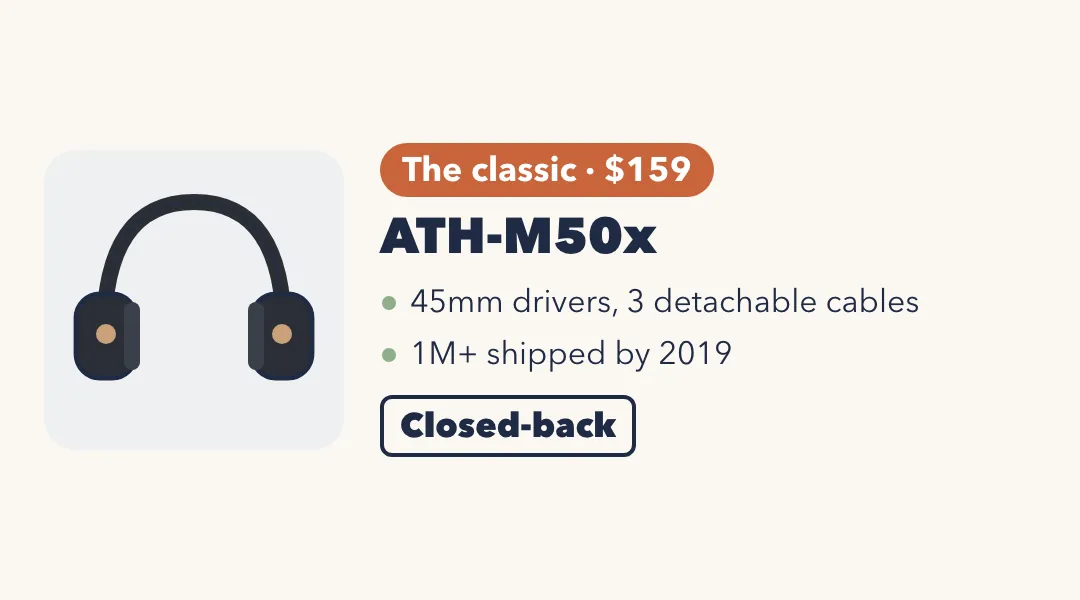
Detachable cables are the big practical difference. The cable is the part that fails first on studio headphones, and on the M50x you just swap it; it even comes with three. The larger 45mm drivers give a fuller low end, which many people enjoy for everyday listening as well as production. Audio-Technica says it shipped more than a million M50x pairs worldwide by 2019, and in Japan it still sells for about 22,000 yen with a 4.55 out of 5 owner rating on Kakaku.com.
Prices and stock on Amazon change often. Look for listings shipped and sold by Amazon.com or an authorized dealer.
Where the MDR-7506 wins
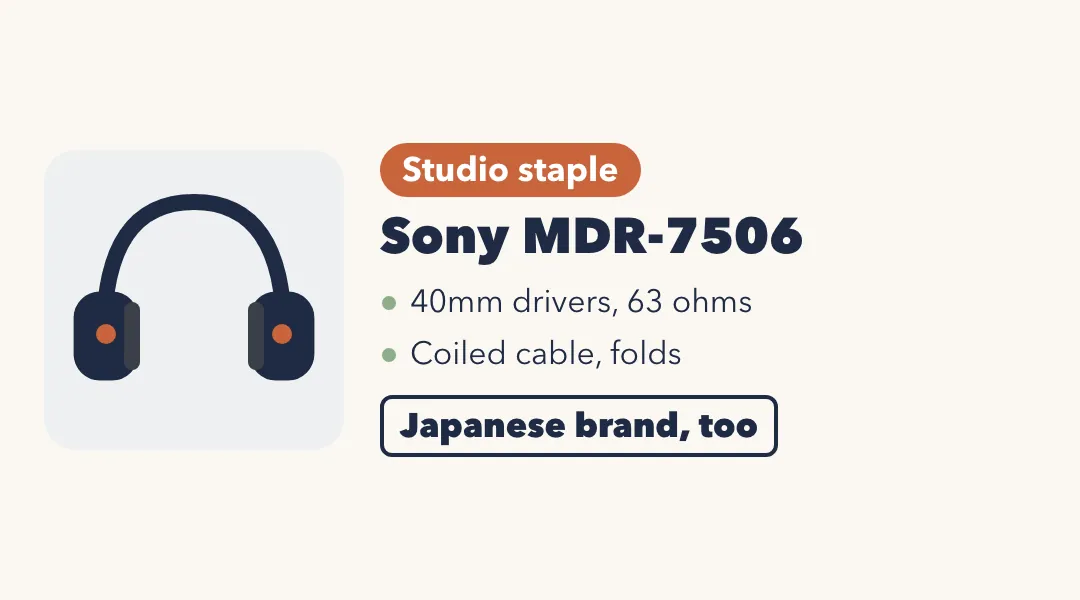
The MDR-7506 is lighter, about 230g, which you notice over a long session, and it has decades of use in US broadcast and film sound behind it. Its coiled cord is attached permanently, which some engineers like because it never comes loose, and it usually costs less than the M50x. Its sound is often described as brighter and more detailed in the upper range.
What Japanese studios use
Here is something you rarely read in English reviews: in Japan, the Sony studio standard is not the MDR-7506 but the MDR-CD900ST, developed with Sony Music Studios in Tokyo and, as Sony says, used in many recording studios since its launch in 1989. It sells in Japan for about 25,000 yen. The MDR-7506 has moved to the archive section of Sony's Japanese website, so it is mainly an overseas model today. In other words, both headphones in this comparison are Japanese designs that are easier to buy in the US than at home.
Which one suits you?
- You want one pair for music, production and daily use: ATH-M50x.
- You wear headphones for hours and want them light: Sony MDR-7506.
- You worry about cables breaking: ATH-M50x.
- You need open-back sound for mixing at home: see R50x vs R70xa.
See the full Audio-Technica lineup in which Audio-Technica headphones to buy.
Source: ATH-M50x (Audio-Technica US)