
This guide contains affiliate links. If you buy through them, we may earn a commission at no extra cost to you.
Japanese Futon (Shikibuton) Guide: Made in Japan vs Japanese-Style, What's Inside, and How to Stop Mold
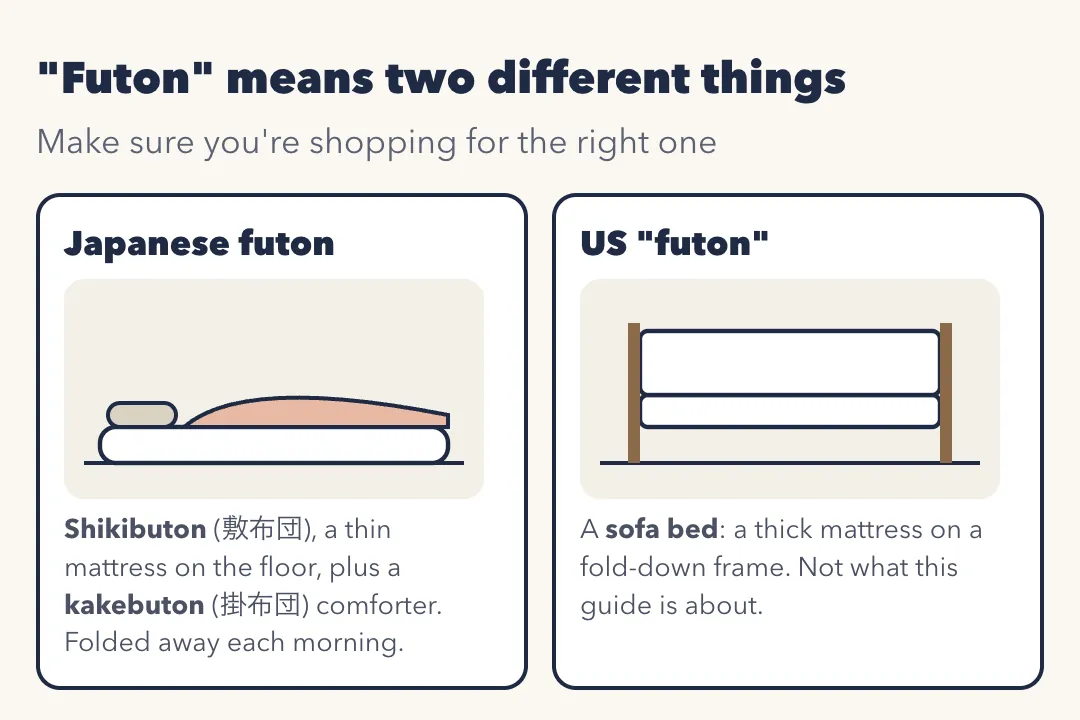
Sleeping on a Japanese futon is simple: a thin mattress on the floor, a comforter on top, and in the morning you fold it all away. It frees up a room, many people find a firm surface comfortable, and it is how millions of people in Japan still sleep. But shopping for one in the US is confusing. The word "futon" means something else here, and many listings called "Japanese futon" are Japanese in style only. This guide explains what to look for, and the one thing nobody tells you until it happens: a futon on a wood floor can grow mold underneath unless you treat it the Japanese way.
What's inside a shikibuton
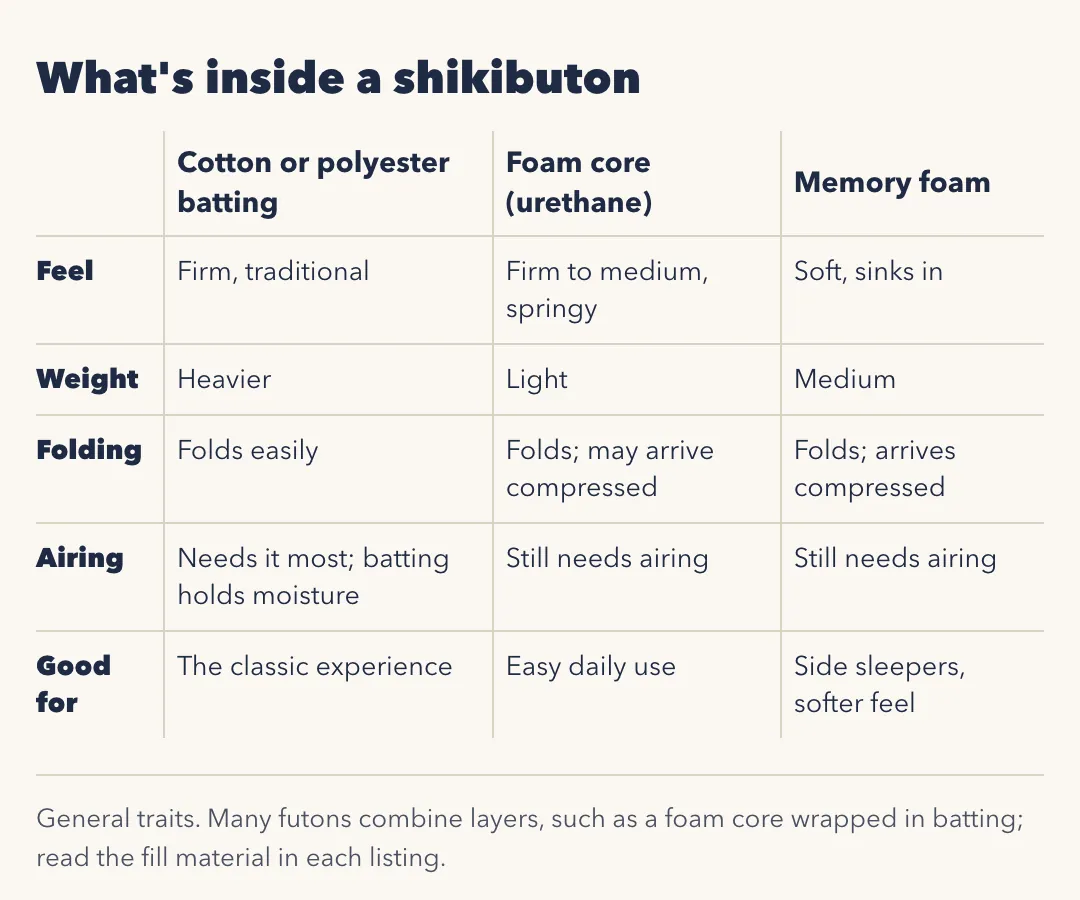
Traditional Japanese shikibuton were filled with cotton batting, which is firm and breathable but heavy and needs regular airing to stay fluffy and dry. Many modern Japanese futons use a urethane foam core, often wrapped in batting, which is lighter and keeps its shape. Memory foam versions feel more like a Western mattress topper. Whatever the fill, the futon will feel firmer than a bed; if you're used to a soft mattress, give yourself a week or two to adjust, or choose a thicker foam model.
"Made in Japan" or Japanese-style?
Search Amazon for "Japanese futon" and most results are from brands that don't say where the futon is made. That isn't necessarily bad, but if you want a futon from a Japanese maker, check three things: the brand, the listing's country of origin, and whether the bullet points actually say where it's made. A "Japanese" in the title only describes the style. The drawings below are simple illustrations, not product photos. Prices and stock change often.
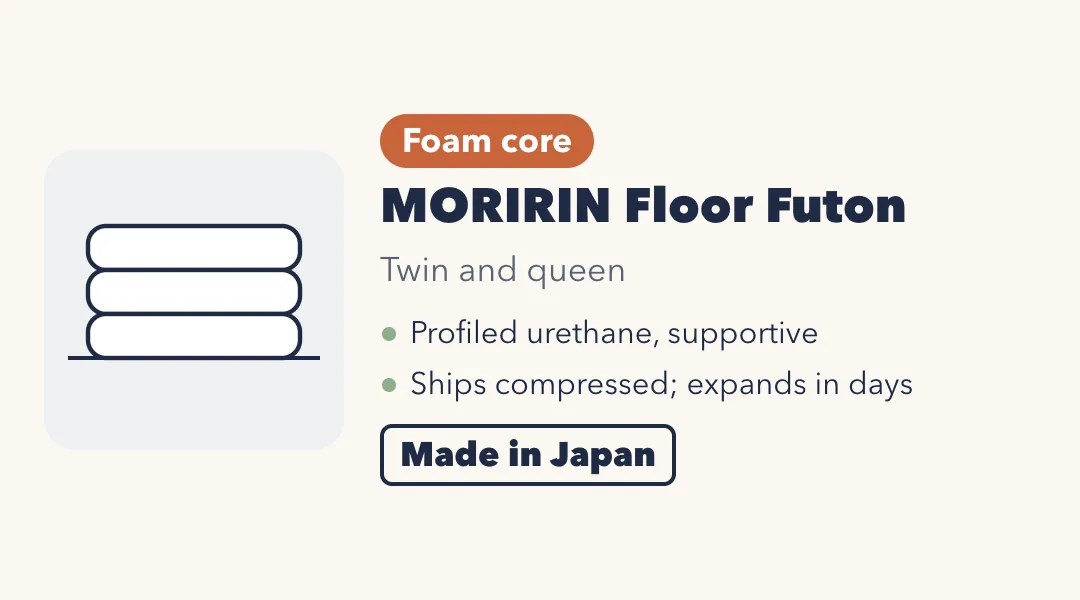
MORIRIN Japanese Floor Futon: made in a Japanese factory. MORIRIN says its futons are crafted one by one in a Japanese factory by skilled futon artisans. The fill is 100% profiled urethane, which MORIRIN says spreads pressure and breathes better than traditional cotton and makes it easy to turn over. It arrives compressed and can take a few days to expand fully; MORIRIN suggests airing it in the sun or warm air to speed that up.
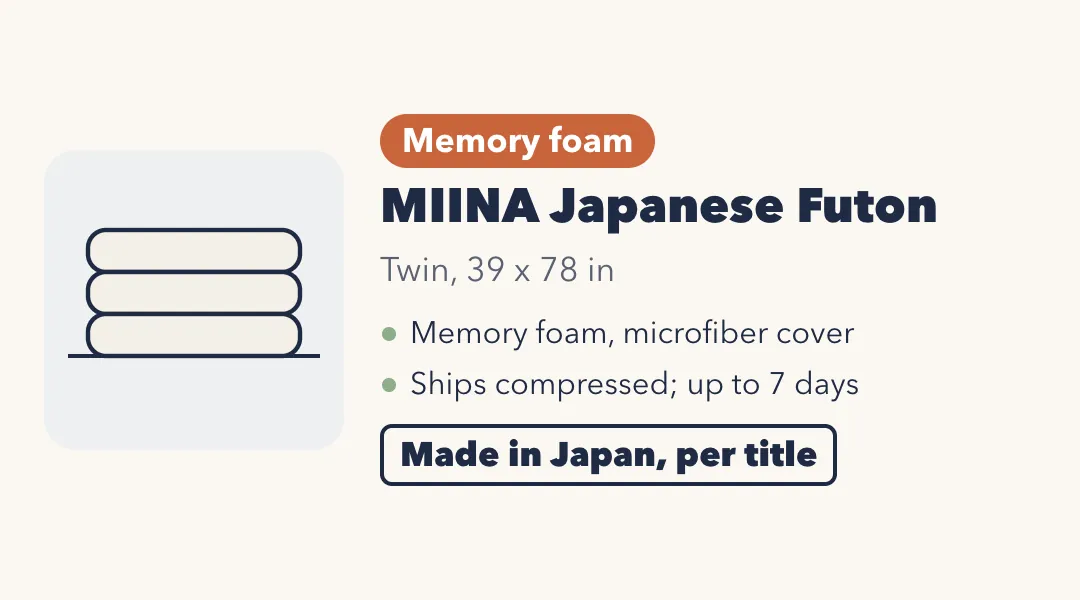
MIINA Japanese Futon: a softer memory foam option. The listing title says made in Japan; the fill is memory foam with a microfiber cover. MIINA says to allow up to seven days for it to expand, recommends a futon cover because the futon itself isn't washable, and suggests drying it in the sun to keep it fluffy.
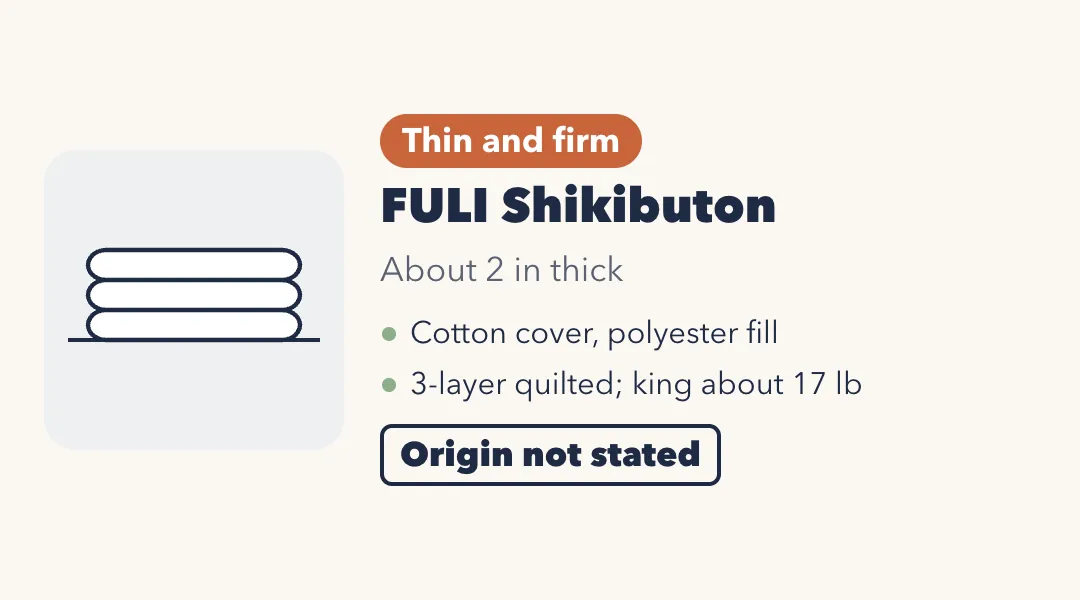
FULI Shikibuton: the thin, traditional feel. FULI's shikibuton has a slim 2-inch profile with a 100% cotton surface and polyester fill in quilted layers, and the king weighs about 17 lb. FULI says it feels thinner and firmer than a Western mattress and is meant for tatami, wood floors or a solid platform. The listing we checked didn't state the country of origin.
Why futons mold, and how to stop it
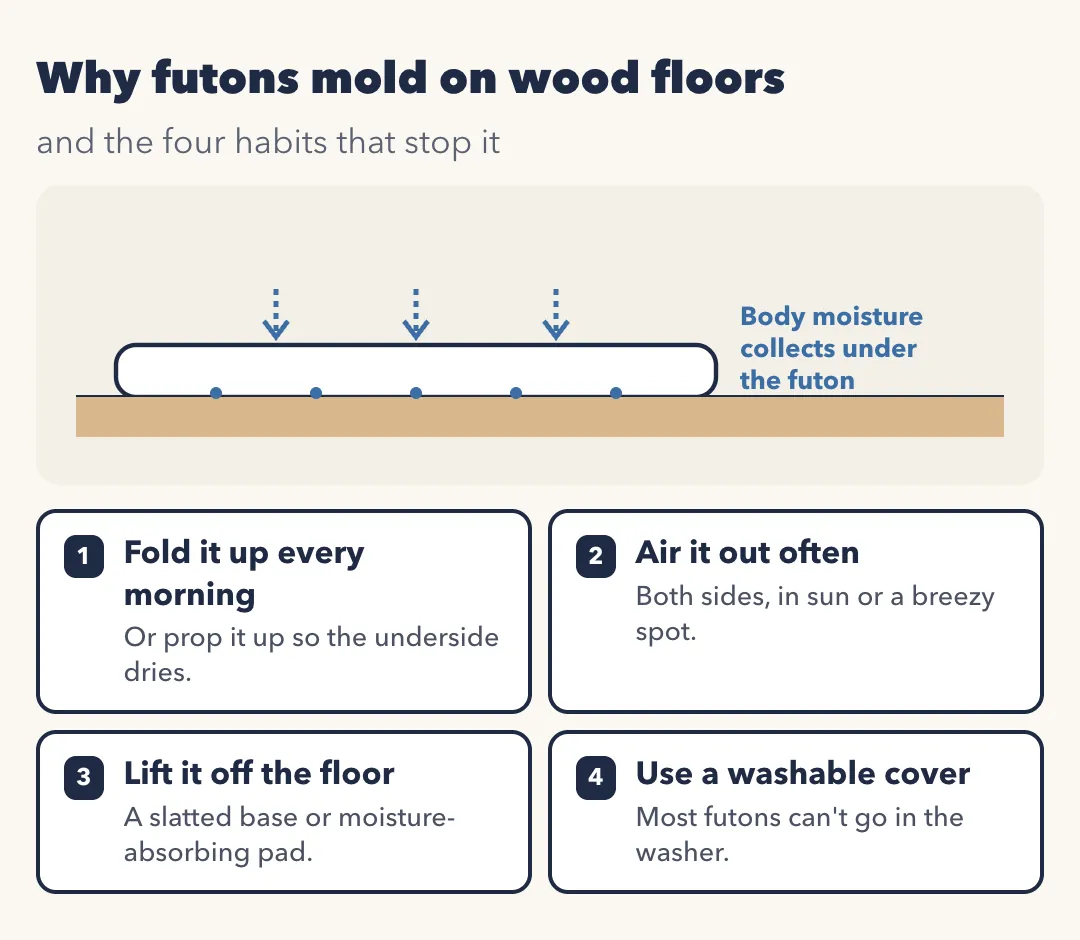
Every night your body gives off moisture, and on a bed it escapes through the mattress and frame. On a floor futon it has nowhere to go: it collects in the bottom layer and against the cool floor, especially on wood, vinyl or concrete. Leave the futon down for weeks and you may lift it to find dark spots. In Japan this is why futons are traditionally folded into a closet (oshiire) every morning and hung outside to air on sunny days. You don't need a balcony to do the same:
- Fold or prop it up each morning, even just against a wall for a few hours, so the underside dries.
- Air it regularly, both sides, in sunlight or by an open window.
- Lift it off the floor with a low slatted base (the Japanese *sunoko*) or a moisture-absorbing pad under the futon. Both are sold in the US under "slatted floor bed frame" and "dehumidifying mat".
- Use a washable futon cover and wash it like a sheet; the futon itself usually isn't washable.
- Check the voltage on futon dryers. Some futon dryers on Amazon US are Japanese domestic models built for 100 V power, the same trap as with a kotatsu. Buy one rated for 120 V.
Which one suits you?
- You want a futon from a Japanese maker: MORIRIN, made in a Japanese factory.
- You want it softer: MIINA memory foam.
- You want the thin, firm, traditional feel: FULI's 2-inch shikibuton.
- Any floor futon on wood floors: add a slatted base or moisture pad and fold it up daily.
- Building a Japanese-style winter room: pair it with a kotatsu.
Source: MORIRIN Japanese Floor Futon Mattress (Amazon listing)