
This guide contains affiliate links. If you buy through them, we may earn a commission at no extra cost to you.
Gyuto vs Santoku vs Bunka vs Nakiri: Which Japanese Kitchen Knife Fits How You Cook
The first time you cut an onion with a good Japanese knife, it feels different. The blade is thin and hard, so it glides through instead of pushing the onion apart, and the slices fall away clean. That is why so many home cooks in the US end up with one. The harder question is which shape to buy, because Japanese knives come in more shapes than the Western chef's knife most of us grew up with.
This guide explains the four shapes you will see most often (gyuto, santoku, bunka and nakiri), what their Japanese names mean, what each one makes easy, and good knives to buy in each shape from Shun, Tojiro, Miyabi and Global. Specs are from each maker's product listings (October 2026).
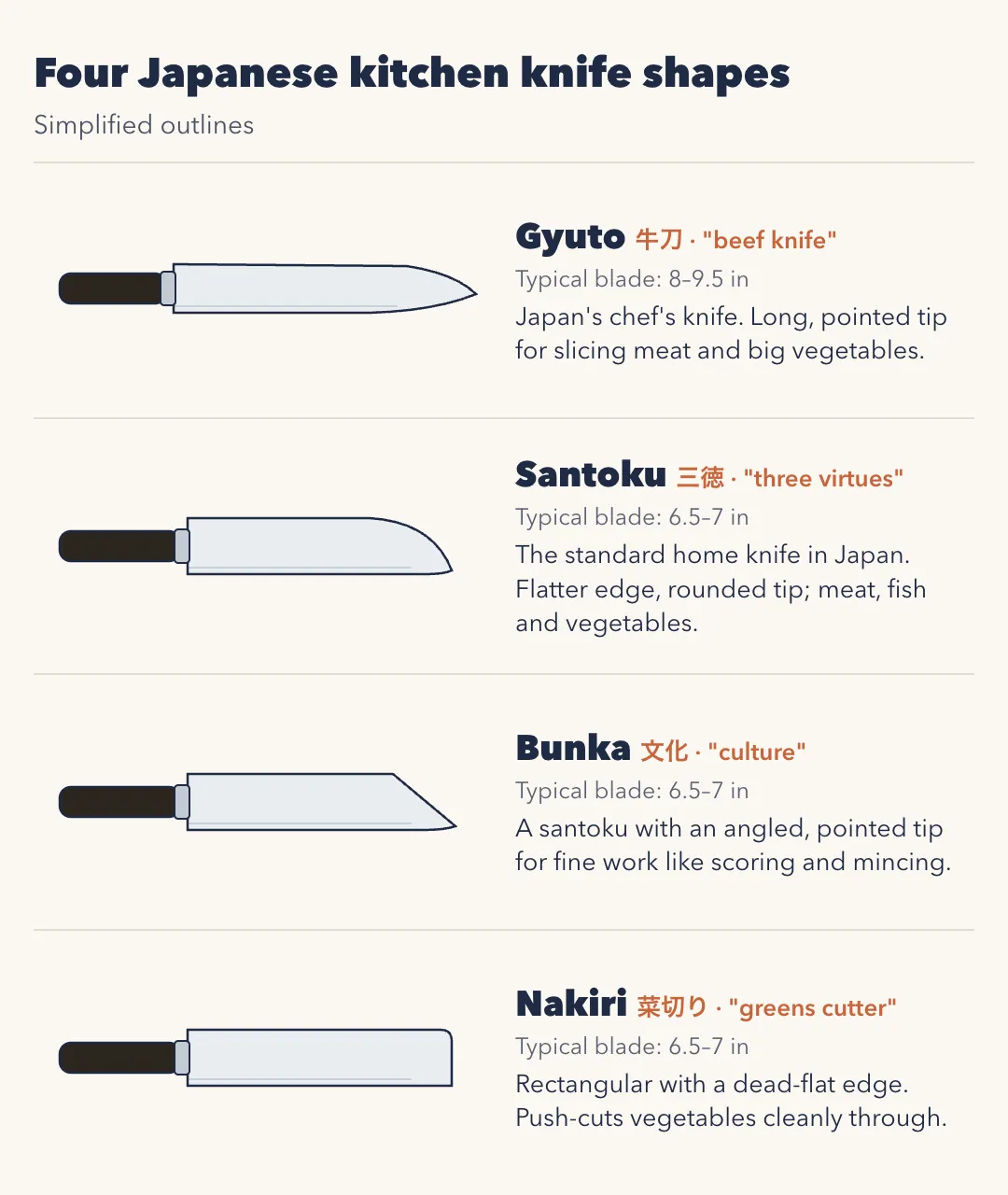
The four shapes at a glance
| Shape | Name means | Typical blade | What it makes easy | Good first pick |
|---|---|---|---|---|
| Gyuto | 牛刀, "beef knife" | 8–9.5 in | Slicing roasts, breaking down squash, long smooth cuts | Shun Classic 8" or Tojiro 8.2" |
| Santoku | 三徳, "three virtues" | 6.5–7 in | Everyday meat, fish and vegetables in a small kitchen | Shun Classic 7" or Tojiro 6.7" |
| Bunka | 文化, "culture" | 6.5–7 in | Santoku jobs plus fine work with the tip | Miyabi Artisan 6.5" |
| Nakiri | 菜切り, "greens cutter" | 6.5–7 in | Fast, clean vegetable chopping | Shun Classic 6.5" or Global G-5 |
Gyuto: the Japanese chef's knife
*Gyuto* (牛刀) literally means "beef knife", a name from when Japan adopted the Western chef's knife for cutting meat. Today it is the all-purpose knife in professional Japanese kitchens. Compared with a typical Western chef's knife, a Japanese gyuto is usually thinner and made of harder steel, so it cuts with less effort and keeps its edge longer. The long blade and pointed tip make it the best of the four for slicing a roast in one smooth stroke, cutting through a butternut squash, or chopping a big pile of herbs.
Prices and stock on Amazon change often, so check the product page for current details.
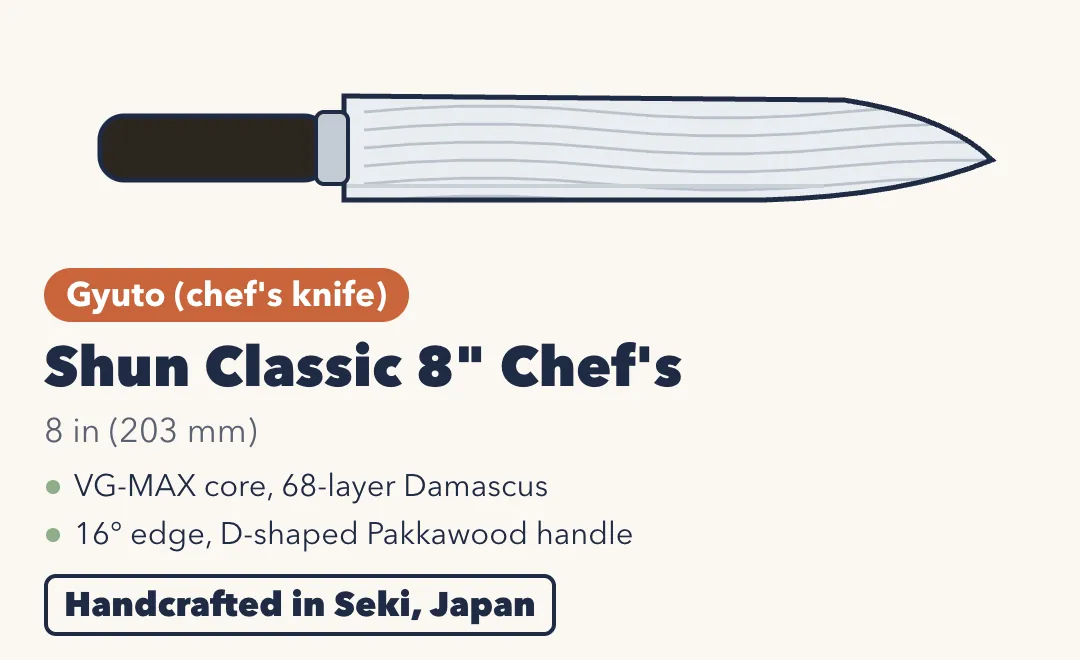
Shun Classic 8" Chef's Knife: the Japanese knife that started it for many Americans. Shun describes the Classic series as the original authentic Japanese cutlery line introduced to the United States. The blade has a VG-MAX steel core wrapped in 68 layers of Damascus cladding, which gives it the rippling pattern, and it is sharpened to a 16-degree edge. The D-shaped Pakkawood handle sits naturally in either hand, and every Shun is handcrafted in Seki, Japan's historic knife-making city.
- Sharp and beautiful: VG-MAX core, 68-layer Damascus, 16-degree edge.
- Comfortable: D-shaped Pakkawood handle for right- or left-handed cooks.
- Best for: someone who wants one excellent knife that looks as good as it cuts.
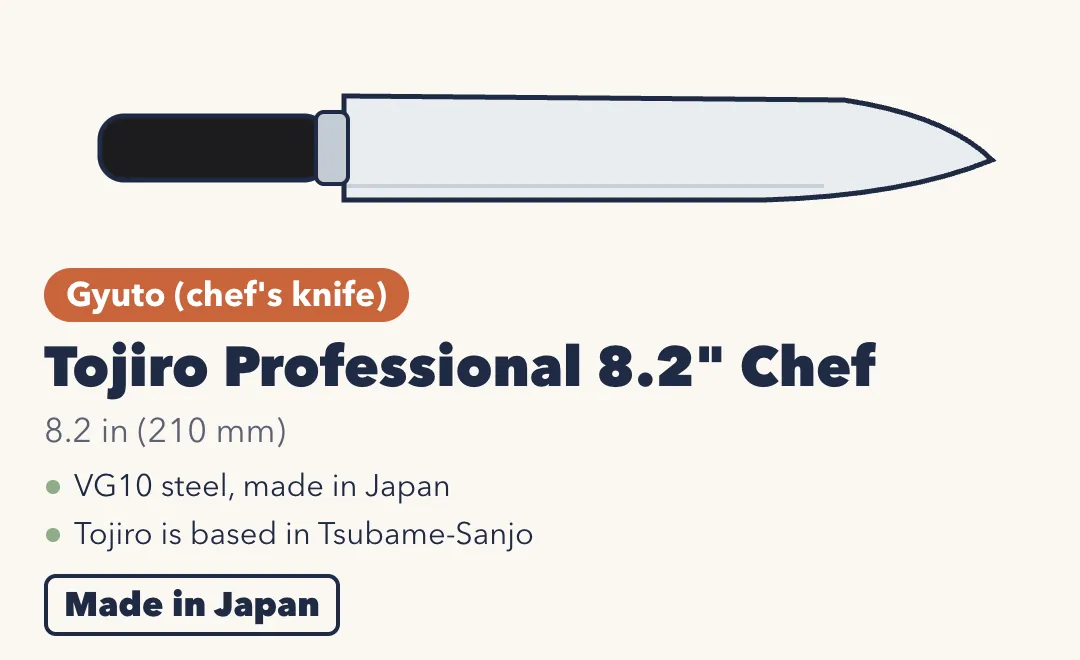
Tojiro 8.2" (210 mm) Chef Knife: the no-frills workhorse. Tojiro is based in Tsubame-Sanjo in Niigata, one of Japan's metalworking centers. This 210 mm gyuto, which Tojiro calls its flagship, uses VG10 steel and is made in Japan. It has no Damascus pattern and a plain black handle, and the money goes into the blade. It is the usual recommendation for a first real Japanese knife.
Santoku: the knife in almost every Japanese home
*Santoku* (三徳) means "three virtues", usually explained as meat, fish and vegetables. It is the knife most Japanese households use every day. The blade is shorter than a gyuto, with a flatter edge and a tip that curves down to meet it. That shape suits an up-and-down chopping motion instead of rocking, and the short blade is easy to control on a small cutting board. If you are not sure what to buy, buy a santoku.
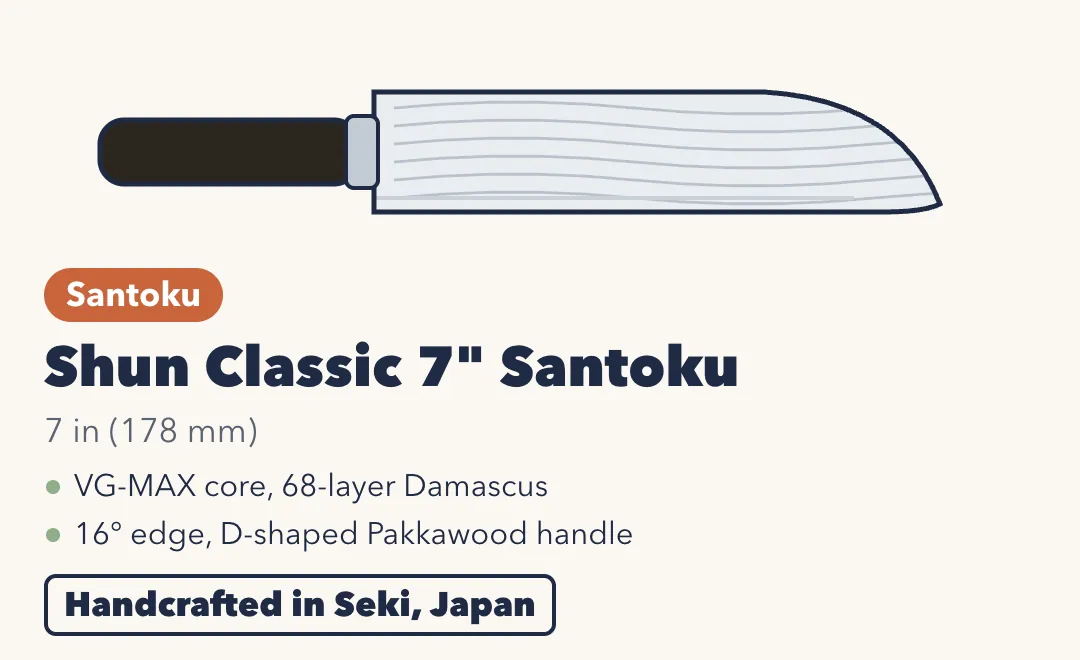
Shun Classic 7" Santoku: nimble and easy to love. Shun describes it as built for slicing vegetables, proteins and fruit "with an easy maneuverability". It has the same VG-MAX core, 68-layer Damascus and 16-degree edge as the Classic chef's knife, in a shorter blade that feels light in the hand.
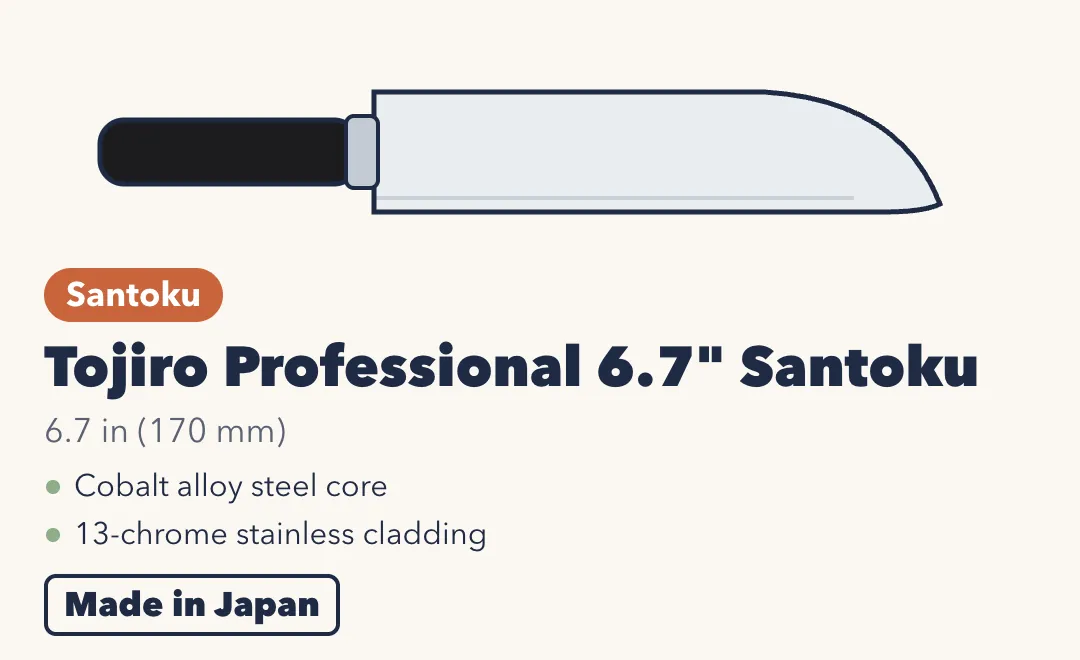
Tojiro 6.7" (170 mm) Santoku: a made-in-Japan everyday knife. The core is cobalt alloy steel, clad in 13-chrome stainless steel for stain resistance, and the edge is ground evenly on both sides, so it works for left- and right-handed cooks. A sensible, durable first santoku.
Bunka: a santoku with a pointed tip
*Bunka* (文化) means "culture". The bunka-bocho appeared in Japanese homes alongside the santoku as a modern, Western-influenced knife, and it is close to a santoku in size. The difference is the tip: the spine angles down to a sharp point, sometimes called a "k-tip". That point is handy for scoring, mincing garlic and shallots, and getting into tight spots, while the rest of the blade does everything a santoku does. Many people also simply find it the best-looking of the four.
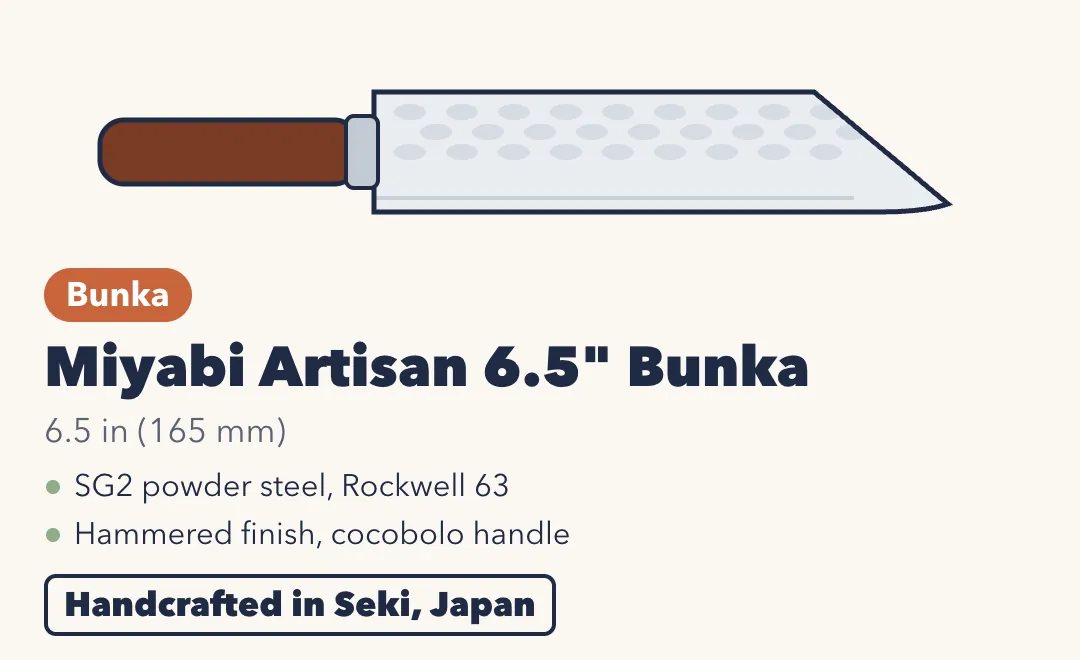
Miyabi Artisan 6.5" Bunka: a showpiece that is also very sharp. The core is SG2 micro-carbide powder steel, ice-hardened to Rockwell 63, and each blade is hand-honed with the three-step Honbazuke process to a 9.5 to 12 degree edge. The hammered *tsuchime* finish helps the blade look handmade, and the D-shaped cocobolo Pakkawood handle adds warm color. It is handcrafted in Seki, Japan.
- Very hard, very sharp: SG2 steel at Rockwell 63, 9.5 to 12 degree edge.
- Handcrafted look: hammered finish and a cocobolo handle.
- Best for: a cook who wants a knife that is a pleasure to look at as well as to use.
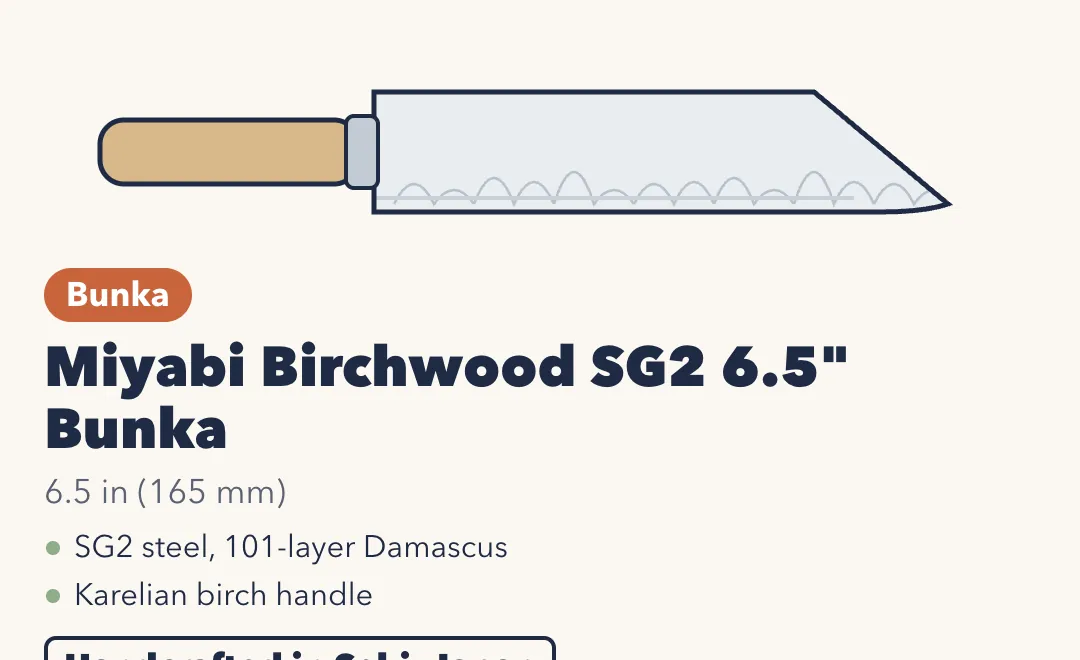
Miyabi Birchwood SG2 6.5" Bunka: the heirloom option. The same SG2 steel and Rockwell 63 hardness, wrapped in a 101-layer "flower" Damascus pattern, with a traditional Japanese handle in Karelian (Masur) birch. A knife to give, or to keep for a long time.
Nakiri: the vegetable knife
*Nakiri* (菜切り) means "greens cutter". The blade is a rectangle with an almost perfectly flat edge, so it meets the cutting board along its whole length. Push the knife straight down and forward, and a scallion or cabbage is cut all the way through, with no slices still joined at the bottom. Cooks who eat a lot of vegetables often find it the most satisfying knife they own. It is not meant for bones or hard frozen food.
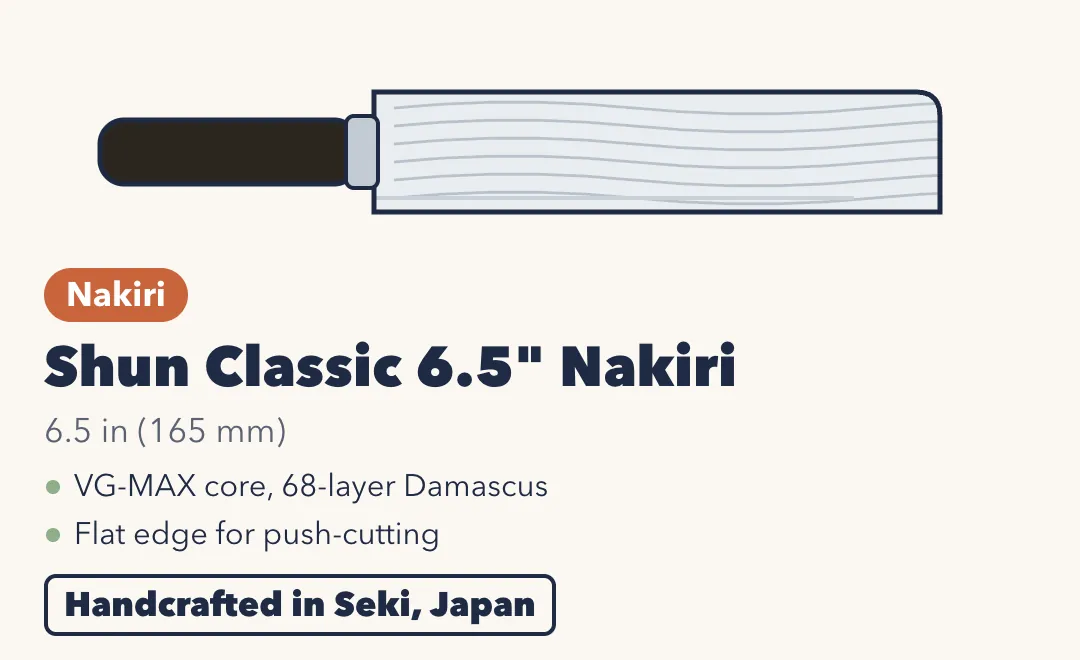
Shun Classic 6.5" Nakiri: makes vegetable prep fun. Shun designed it for "slicing and dicing vegetables with precision and ease". It shares the Classic series' VG-MAX core and 68-layer Damascus, and the tall blade doubles as a scoop for carrying chopped vegetables to the pan.
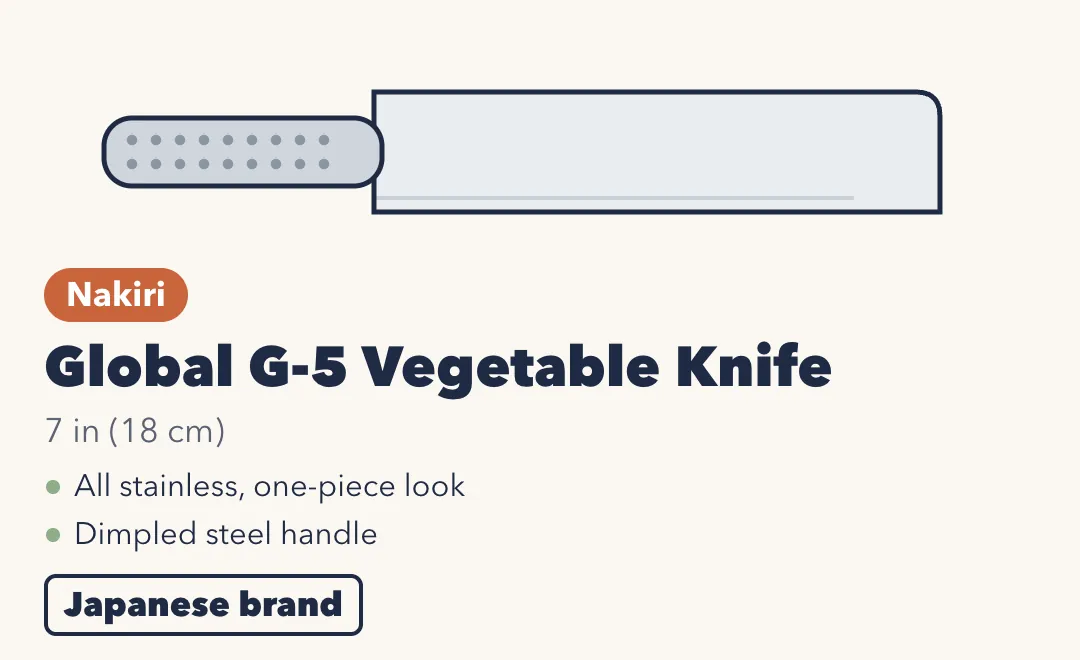
Global G-5 7" Vegetable Knife: modern and light. Global's all-stainless knives are instantly recognizable by their dimpled steel handles, molded for a secure grip. The G-5 is a lightweight, balanced vegetable knife in molybdenum/vanadium stainless steel, and Global backs it with a lifetime warranty against defects and breakage. Easy to keep clean, with no wood to look after.
Caring for a Japanese knife
The hard, thin steel that makes these knives cut so well also asks for a little care. Treat it right and it stays sharp for a long time.
- Wash by hand and dry right away. Not in the dishwasher.
- Use a wood or plastic cutting board, not glass, stone or a plate.
- Skip bones and frozen food, and don't twist the blade in hard squash; a thin, hard edge can chip.
- Sharpen on a whetstone or send it to the maker: Shun offers free lifetime sharpening.
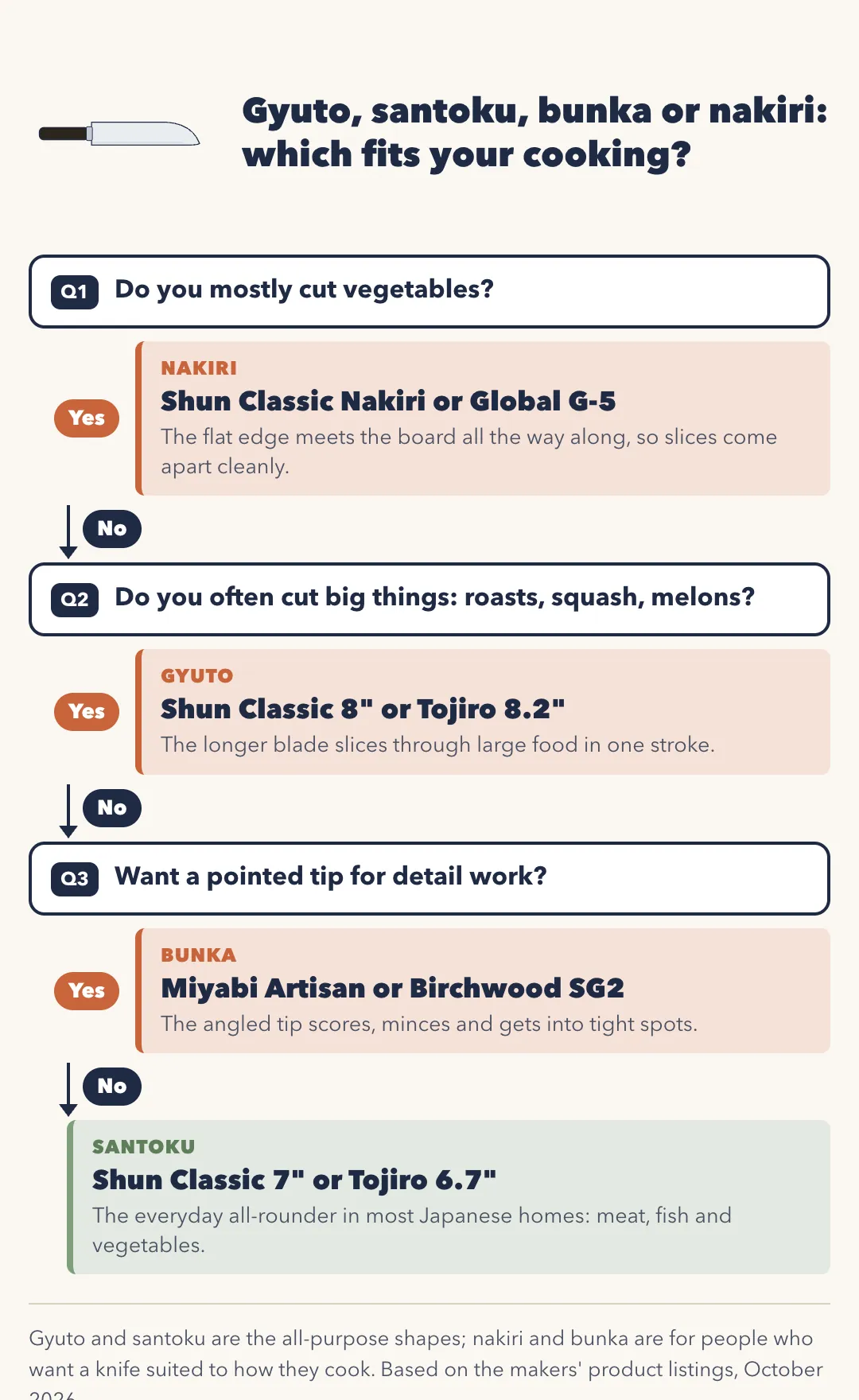
Which one suits you?
- Your first Japanese knife, for everything: a santoku, Shun Classic 7" or Tojiro 6.7".
- You cut big roasts, squash and melons, or like a longer blade: a gyuto, Shun Classic 8" or Tojiro 8.2".
- You want a santoku with a sharp tip, and a knife that looks special: a bunka, Miyabi Artisan or Birchwood SG2.
- You cook mostly vegetables: a nakiri, Shun Classic 6.5" or Global G-5.
- Building a set: start with a santoku or gyuto, then add a nakiri for vegetables.
Source: Shun Cutlery (Kai USA)