
This guide contains affiliate links. If you buy through them, we may earn a commission at no extra cost to you.
Japanese Whetstones for Beginners: Which Grit to Buy, and King vs Shapton vs Naniwa
A Japanese knife feels magical when it's new. Six months later, it slides off a tomato skin. That is not the knife getting worse; every edge dulls. The good news is that a few minutes on a whetstone brings it back to better than new, and it is one of the most satisfying kitchen skills you can learn. Japan is where water-stone sharpening comes from, and three Japanese makers, King, Shapton and Naniwa, make the stones most US cooks start with. This guide explains what the grit numbers mean, which stone to buy first, and how to use it.
What the grit numbers mean
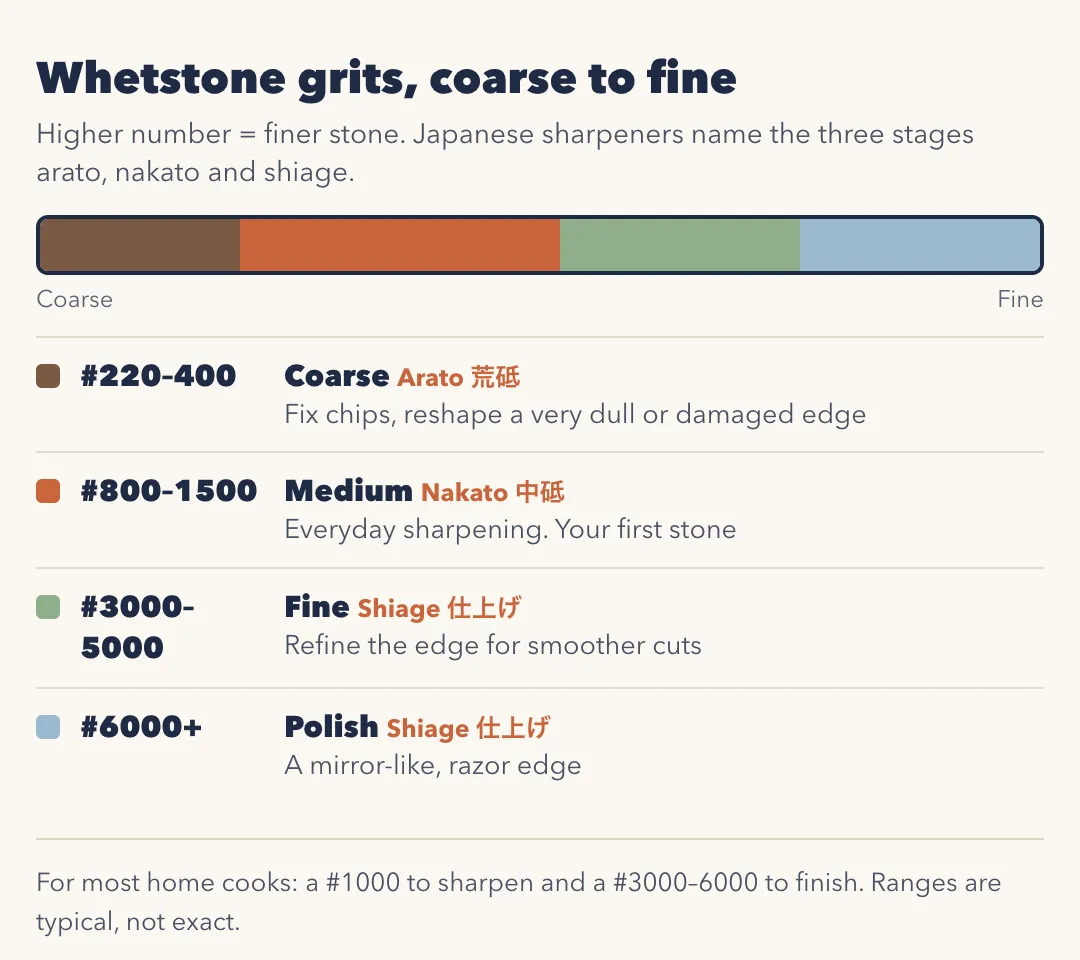
The number is the grit: the higher the number, the finer the stone. Japanese sharpeners think in three stages. A coarse *arato* (荒砥, "rough stone") repairs chips. A medium *nakato* (中砥, "middle stone"), around #1000, does the real sharpening. A fine *shiage* (仕上げ, "finishing") stone polishes the edge so it glides through food. For a home knife that is just dull, not chipped, you only need the middle and the finish: a #1000 and something around #3000 to #6000. That is exactly what a combination stone gives you.
The classic first stone: King 1000/6000
King, made by Matsunaga Stone in Japan, is the stone generations of Japanese cooks learned on. A King 1000/6000 combination stone is two stones glued back to back: you sharpen on the 1000 side, flip it, and finish on the 6000 side. One stone, every step a home cook needs. King stones are soaking stones, so put them in water for a few minutes before you start. If the sides aren't marked, the 1000 side is the one that feels noticeably rougher.
The drawings below are simple illustrations, not product photos. Prices and stock on Amazon change often, so check the product page for current details.
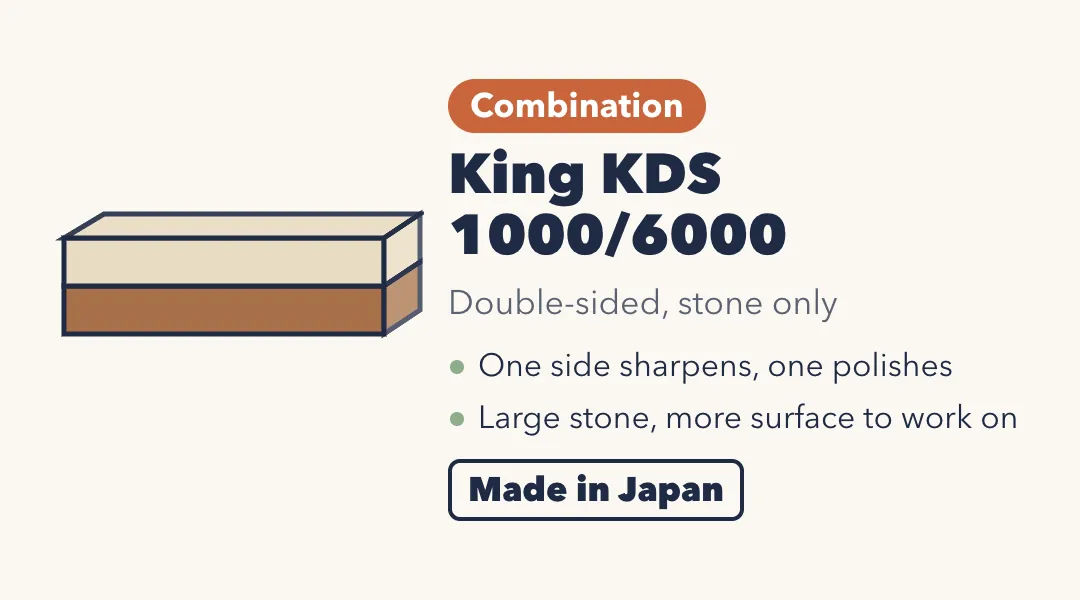
King KDS 1000/6000: the best first whetstone for most people. It is made in Japan, and its larger size gives you more surface to work on, which makes sharpening faster and easier. The 1000 side quickly sharpens a dull knife and the 6000 side hones and finishes the edge.
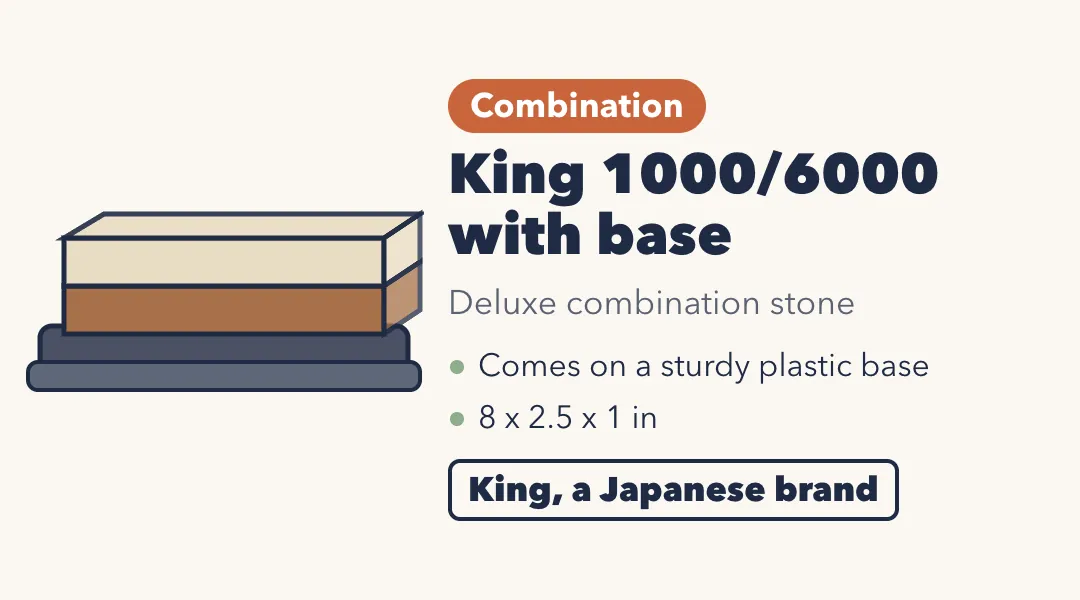
King 1000/6000 with base: the same idea, ready to set on the counter. This deluxe combination stone comes on a sturdy plastic base that holds it steady, so you don't need a separate holder.
No soaking: Shapton
Shapton is the Japanese maker that many sharpening enthusiasts move to next. Its stones are hard and fast-cutting, and they need far less water prep than a King.
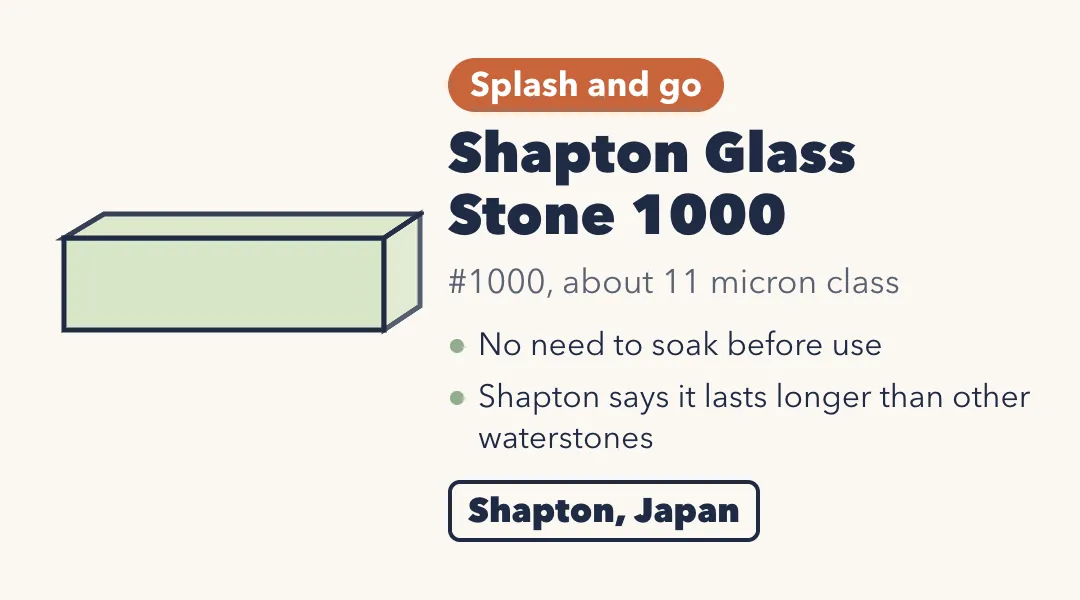
Shapton Glass Stone 1000: splash and go. Shapton says there is no need to soak it before use, so you can wet the surface and start sharpening right away. It also says the stone lasts longer than other waterstones and uses carefully graded particles, about 11 microns for the #1000. Perfect if you want to sharpen for five minutes on a weeknight without planning ahead.
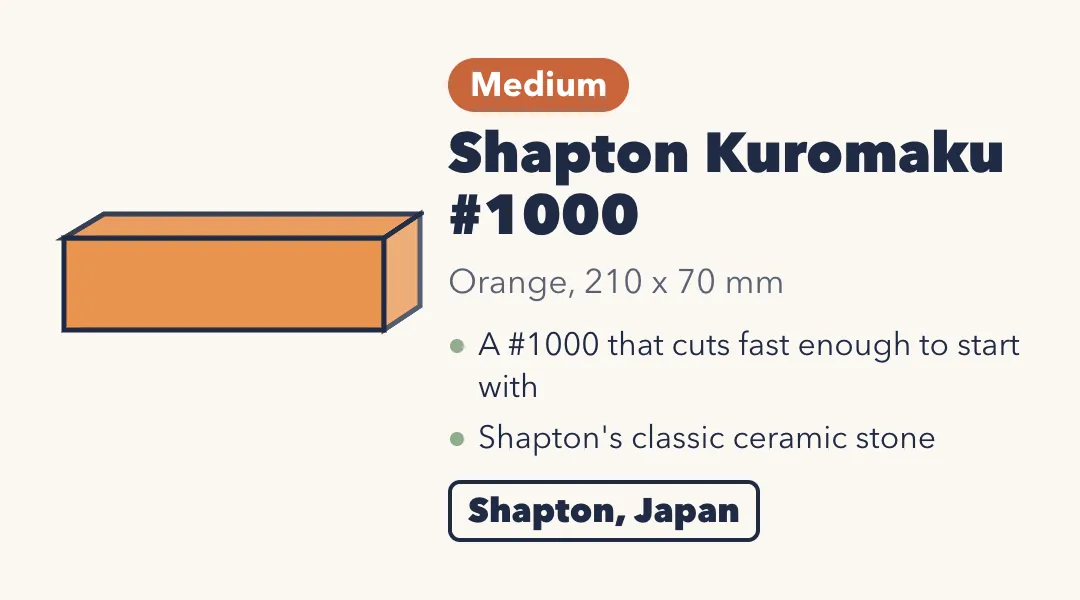
Shapton Kuromaku #1000 (orange): the classic Shapton. Shapton describes it as a #1000 that cuts well enough to use as your rough or medium stone. Follow the wetting instructions in the box.
Ready on a base: Naniwa
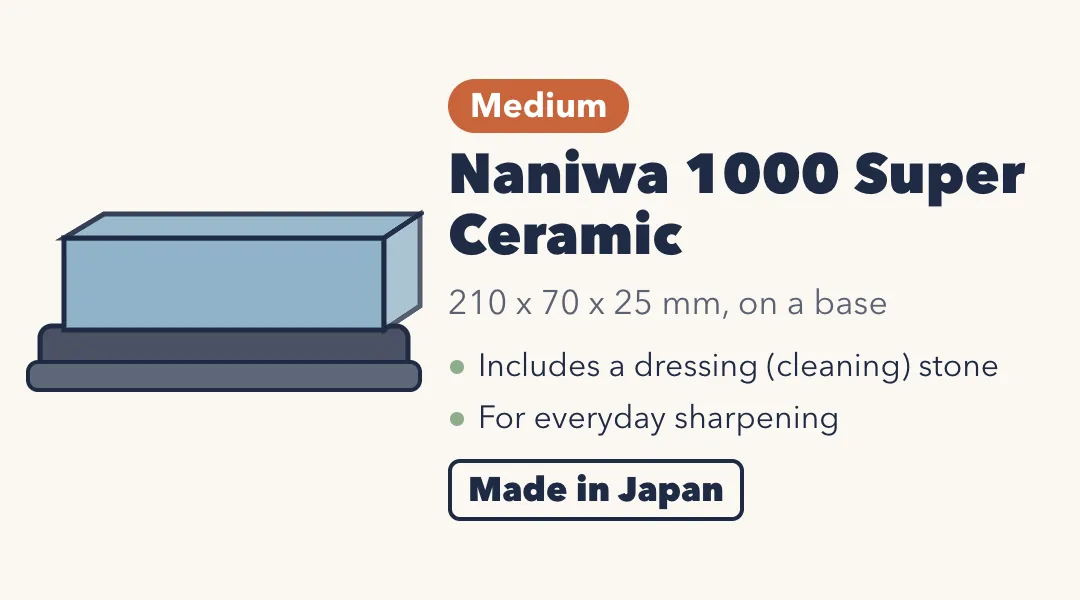
Naniwa 1000 Super Ceramic: everything in the box. Naniwa is an Osaka-area abrasives maker, and this #1000 comes mounted on a base with a small dressing stone for cleaning the surface. It is made in Japan and is meant for everyday, medium sharpening.
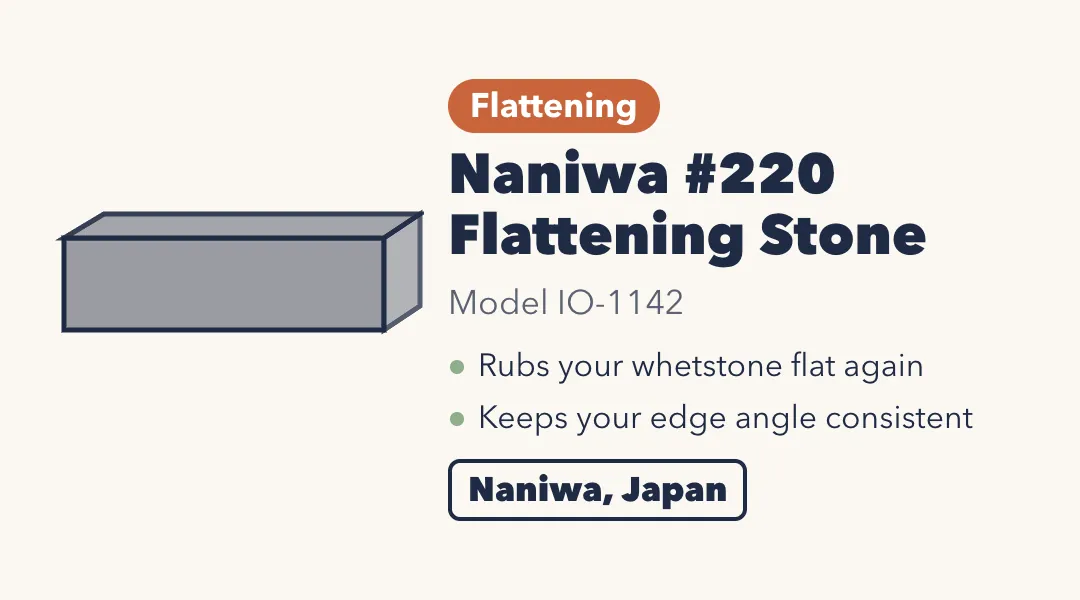
Naniwa #220 flattening stone: the accessory you'll need later. Every whetstone wears a shallow dip in the middle as you use it, and a dished stone makes it hard to hold a steady angle. Rub this coarse stone over your whetstone every few sessions to make it flat again.
How to sharpen a Japanese knife, step by step
1. Wet the stone and set it steady
Soak a King stone for a few minutes; just wet a Shapton Glass Stone. Put the stone on its base or on a damp towel so it can't slide, 1000 side up.
2. Find the angle
Hold the knife at its factory angle, a shallow tilt for Japanese knives (Shun, for example, sharpens to 16 degrees). Keep the angle the same on every stroke. That consistency matters more than the exact number.
3. Sharpen until you feel a burr
Push and pull the edge across the stone in sections, from heel to tip, with light pressure from your fingertips. Keep going until you can feel a tiny rough lip, the burr, along the opposite side of the edge. Then turn the knife over and repeat.
4. Finish on the fine side
Flip to the 6000 side and repeat with lighter, fewer strokes. This removes the burr and polishes the edge.
5. Rinse, dry and flatten
Rinse and dry the knife and let the stone air-dry. Every few sessions, flatten the stone.
Haven't chosen a knife yet? See our guide to Japanese knife shapes and Shun vs Miyabi.
Which one suits you?
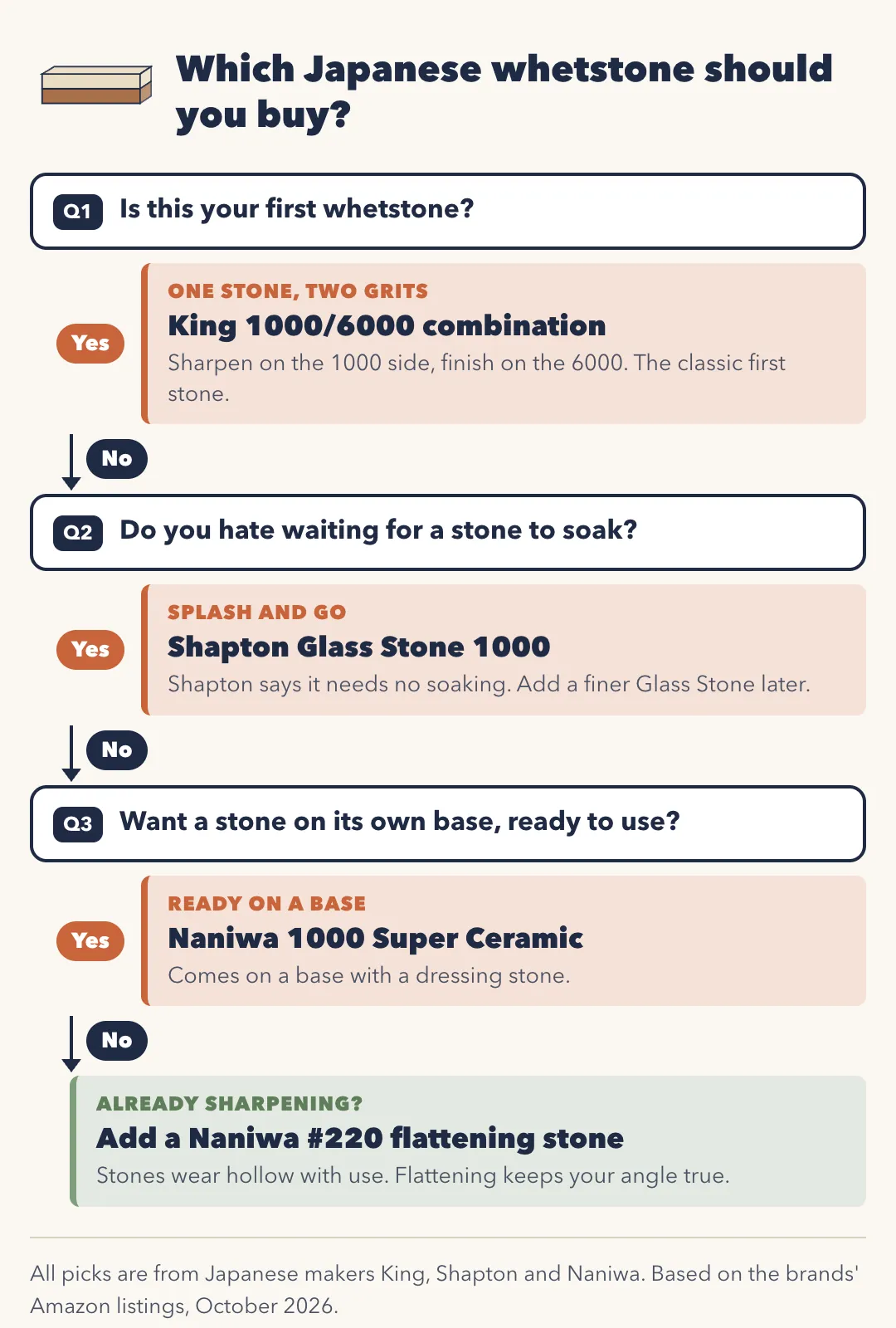
- Your first whetstone: King KDS 1000/6000, or the King 1000/6000 with a base.
- No time to soak: Shapton Glass Stone 1000.
- Want it ready on a base, with a cleaning stone: Naniwa 1000 Super Ceramic.
- Already sharpening regularly: add a Naniwa #220 flattening stone.