
This guide contains affiliate links. If you buy through them, we may earn a commission at no extra cost to you.
Carbon Steel vs Stainless Japanese Knives: Which to Buy, and How to Stop Rust
The first time a new Japanese knife shows an orange spot, most owners panic. Usually the knife is fine; it just needs a different routine from the stainless knives most of us grew up with. Whether you need that routine depends on one choice: carbon steel or stainless. This guide explains the difference, decodes the Japanese steel names you'll see in listings, and covers daily care and what to do if rust appears.
Carbon vs stainless, in short
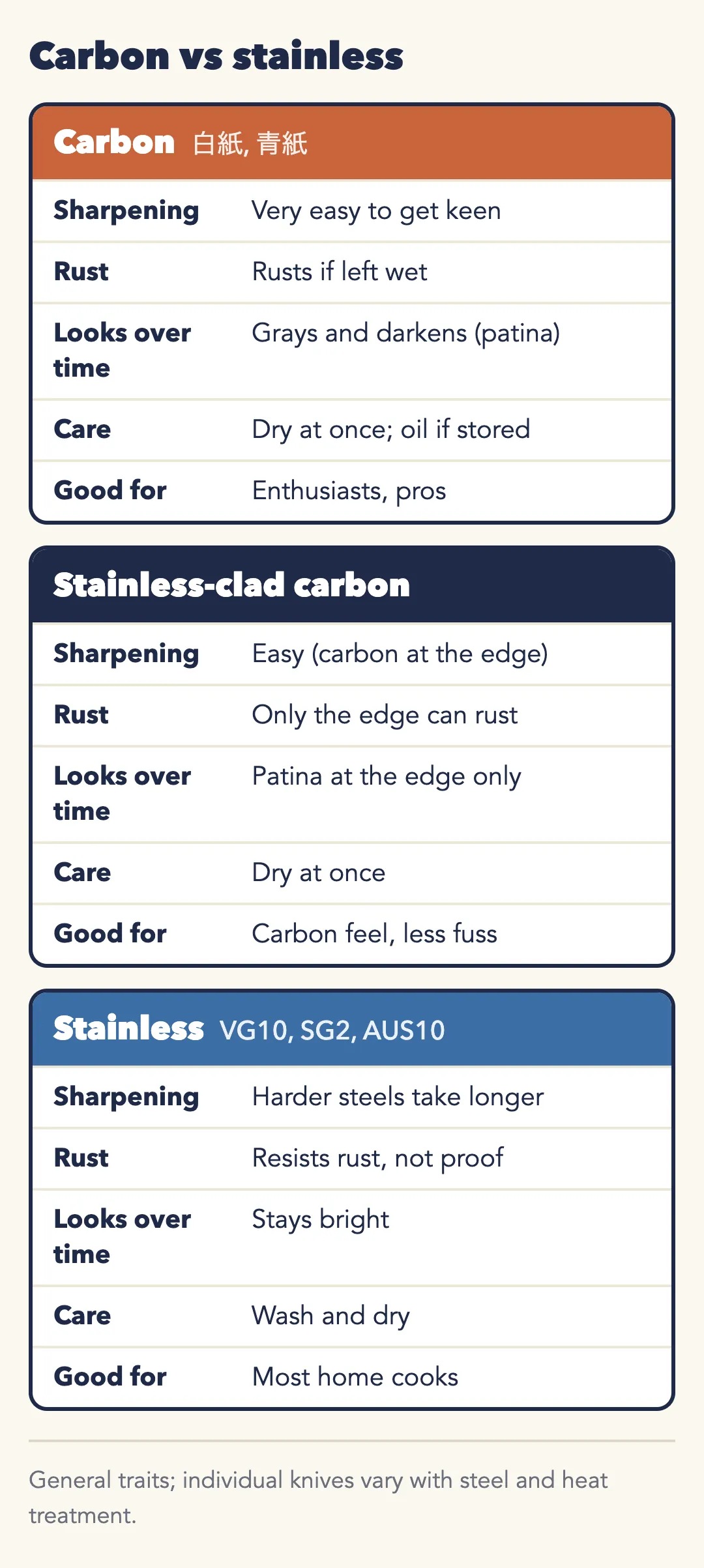
Carbon steel is what traditional Japanese knives were made from, and many professionals still prefer it: it takes a very fine edge and is quick to sharpen on a whetstone. The catch is that it reacts with water and acidic food. Leave it wet and it rusts; use it normally and it gradually turns gray. Stainless steel contains enough chromium to resist rust, so it forgives a knife left on the board for a few minutes. Today's Japanese stainless steels are hard enough to hold a long-lasting edge, which is why almost all the knives in our other guides are stainless. A third option, stainless-clad carbon, puts a carbon core inside stainless outer layers, so only the very edge needs carbon-style care.
Japanese steel names, decoded
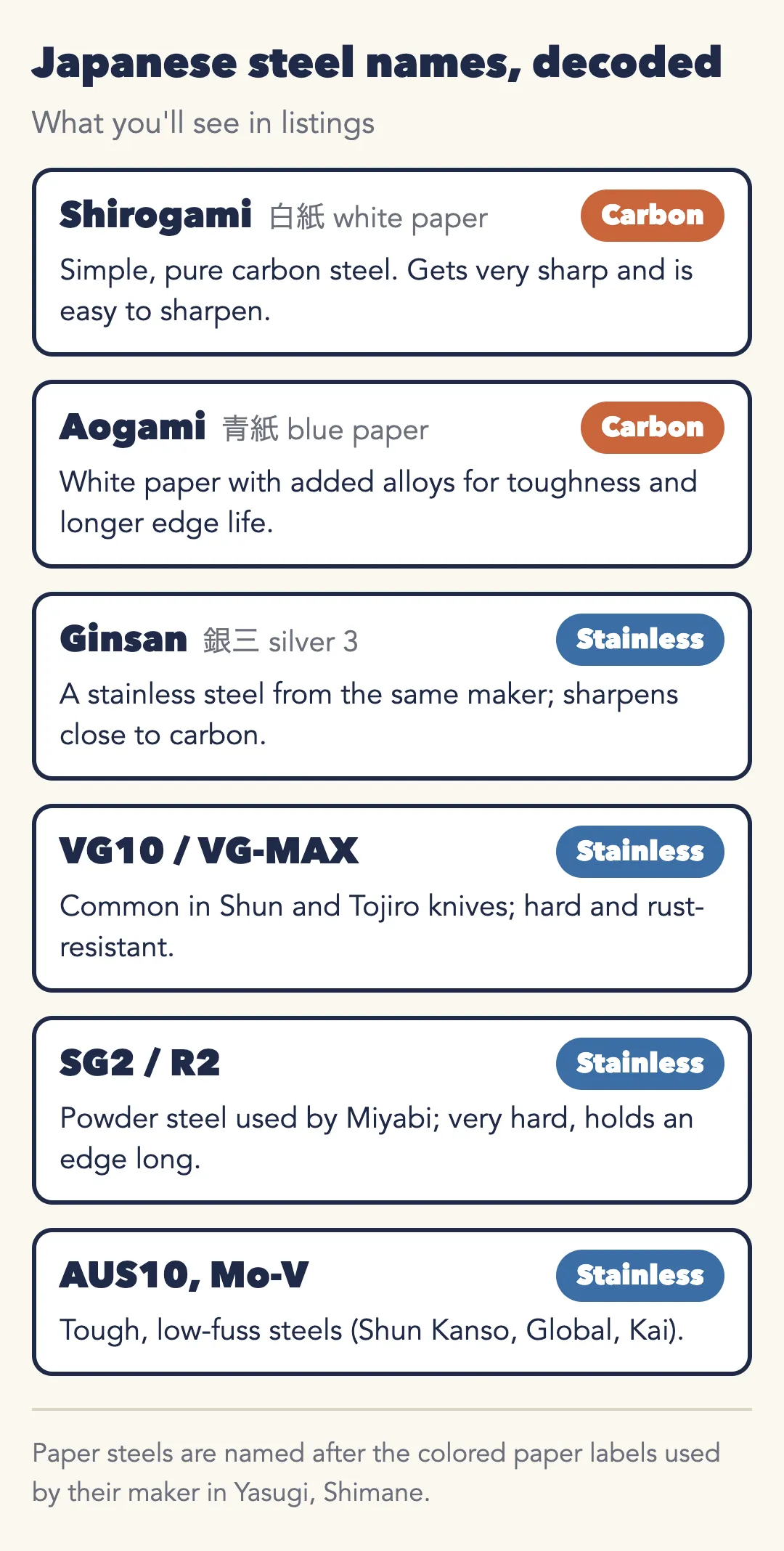
The "paper" names come from Yasugi in Shimane, where the steels are made: the bars were identified by the color of the paper label, white, blue or silver. In Japanese listings you'll also see hagane (鋼), which simply means carbon steel, and Nihonkou (日本鋼), "Japanese steel". If a listing only says "high-carbon stainless", it is stainless.
Patina is not rust
A carbon blade slowly develops a patina: a gray, blue or bluish-purple film, often uneven, that appears after cutting onions, citrus or meat. It is a stable oxide layer, and it actually helps protect the steel from red rust. You don't need to scrub it off. Rust is different: orange or brown, powdery, and it grows if ignored. Patina is a sign of use; rust is a sign the knife was left wet.
A daily routine that prevents rust
1. Wipe as you work
Acidic food (onions, tomatoes, citrus) speeds up rust and patina on carbon steel. Wipe the blade with a damp cloth between tasks.
2. Wash by hand right after use
Warm water and a little dish soap, with the edge facing away from your hand. Never the dishwasher: heat, harsh detergent and banging against other items dull and chip thin edges, and can damage wooden handles.
3. Dry it completely, at once
Dry the blade, spine and the area where the blade meets the handle. Don't leave it in a dish rack. This one step prevents most rust, even on carbon steel.
4. Oil carbon blades before storing
If you won't use a carbon knife for a few days, wipe on a thin film of camellia oil (*tsubaki* oil), the traditional choice in Japan because it is food safe. Stainless knives don't need this.
5. Store it dry and protected
A magnetic strip, a knife block or a blade guard (*saya*) keeps the edge from knocking against other tools. Avoid storing a knife in a damp drawer or sheath while it is still wet.
If rust appears
- Light surface rust: rub the spot with a rust eraser (a rubber block with fine abrasive, called *sabitori* in Japan), moving along the blade, not across the edge.
- Wash, dry and oil the blade afterward.
- Deep pitting or rust at the edge: the knife may need to be resharpened. Shun offers free sharpening for its own knives; for others, use a whetstone or a sharpening service.
- Avoid harsh abrasives like steel wool on stainless or Damascus finishes, which will scratch the pattern.
This kit from Yoshihiro bundles pure camellia oil, a *sabitori* rust eraser and a microfiber cloth. Yoshihiro says a light coat of camellia oil forms a protective barrier on high-carbon steel blades and is food safe.
Which steel should you buy?
For most home cooks, stainless. You get a sharp, hard Japanese edge without the rust worries, and every knife in gyuto vs santoku, bunka and nakiri and Global vs Shun vs Wüsthof is stainless. Tojiro's VG10 gyuto is a good, low-cost example.
Choose carbon steel if you enjoy sharpening on a whetstone, like the look of a patina, and will dry the knife every time. The drawing below is a simple illustration, not a product photo.
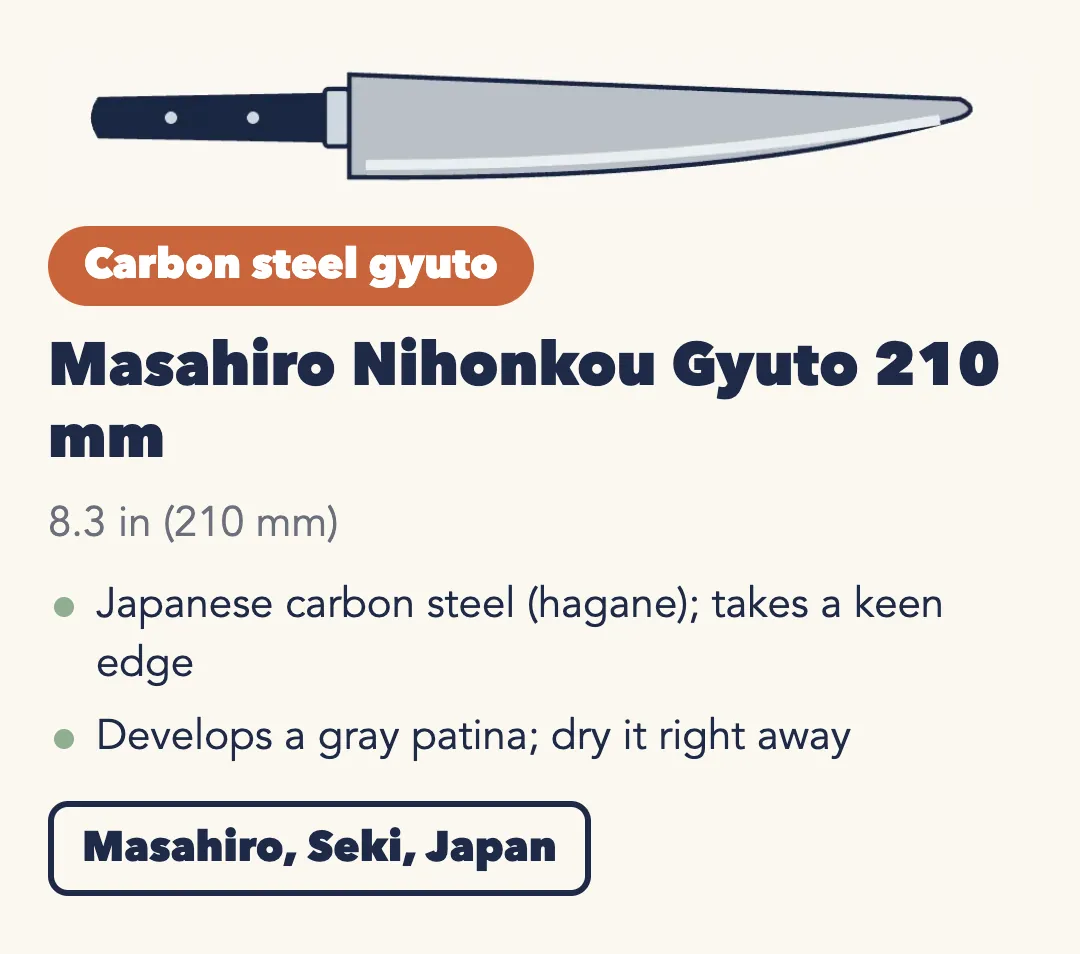
Masahiro Nihonkou Gyuto 210 mm. A carbon steel (*hagane*) gyuto with a Western-style handle and bolster, from Masahiro in Seki. On Amazon it ships from Japan, so allow extra delivery time.
Which one suits you?
- You want a sharp knife and minimal fuss: stainless (VG10, VG-MAX, SG2).
- You love sharpening and don't mind a patina: carbon (shirogami, aogami).
- You want carbon's edge with less care: stainless-clad carbon.
- Already have rust: rust eraser, then wash, dry and oil.
- Need a whetstone: see our whetstone guide.
Source: Yoshihiro Tsubaki Camellia Knife Oil Care Kit (Amazon listing)