
This guide contains affiliate links. If you buy through them, we may earn a commission at no extra cost to you.
The Best Japanese Knife for Meat, Fish or Vegetables: Sujihiki, Deba, Yanagiba, Usuba and More
A Western kitchen usually gets by with a chef's knife and a paring knife. A Japanese kitchen, especially a professional one, has a knife for each job: one for slicing roasts, one for taking a whole fish apart, one for sashimi, one for paper-thin vegetables. You don't need all of them. But if you cook a lot of one kind of food, the right specialist knife makes that work noticeably easier. This guide goes through Japanese knives by what you cook, and flags the one thing that trips up most buyers: single-bevel blades.
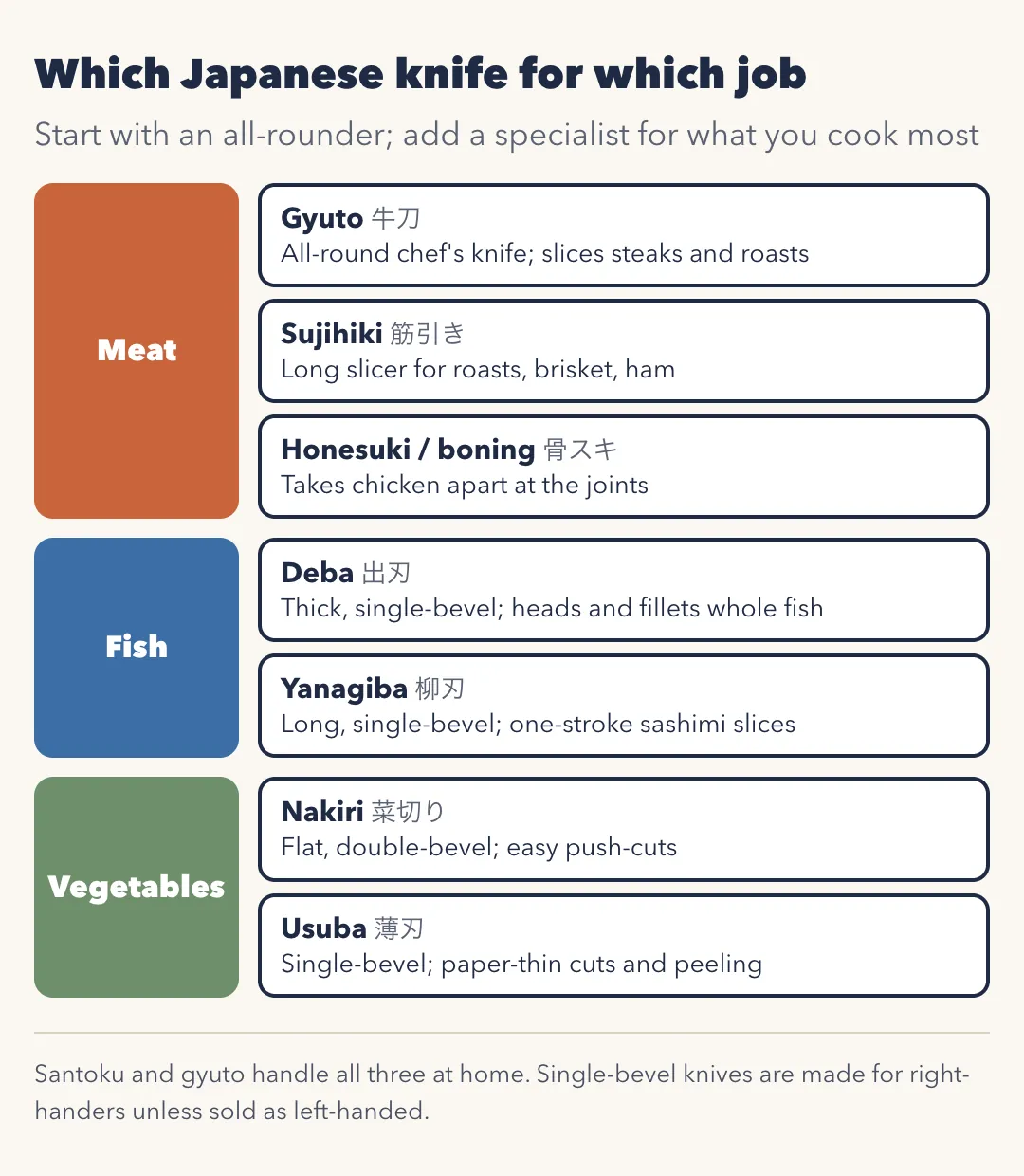
If you don't own a good all-rounder yet, start there: a gyuto or santoku handles meat, fish and vegetables in a home kitchen. See gyuto vs santoku, bunka and nakiri. The knives below are what you add next.
First, the single-bevel catch
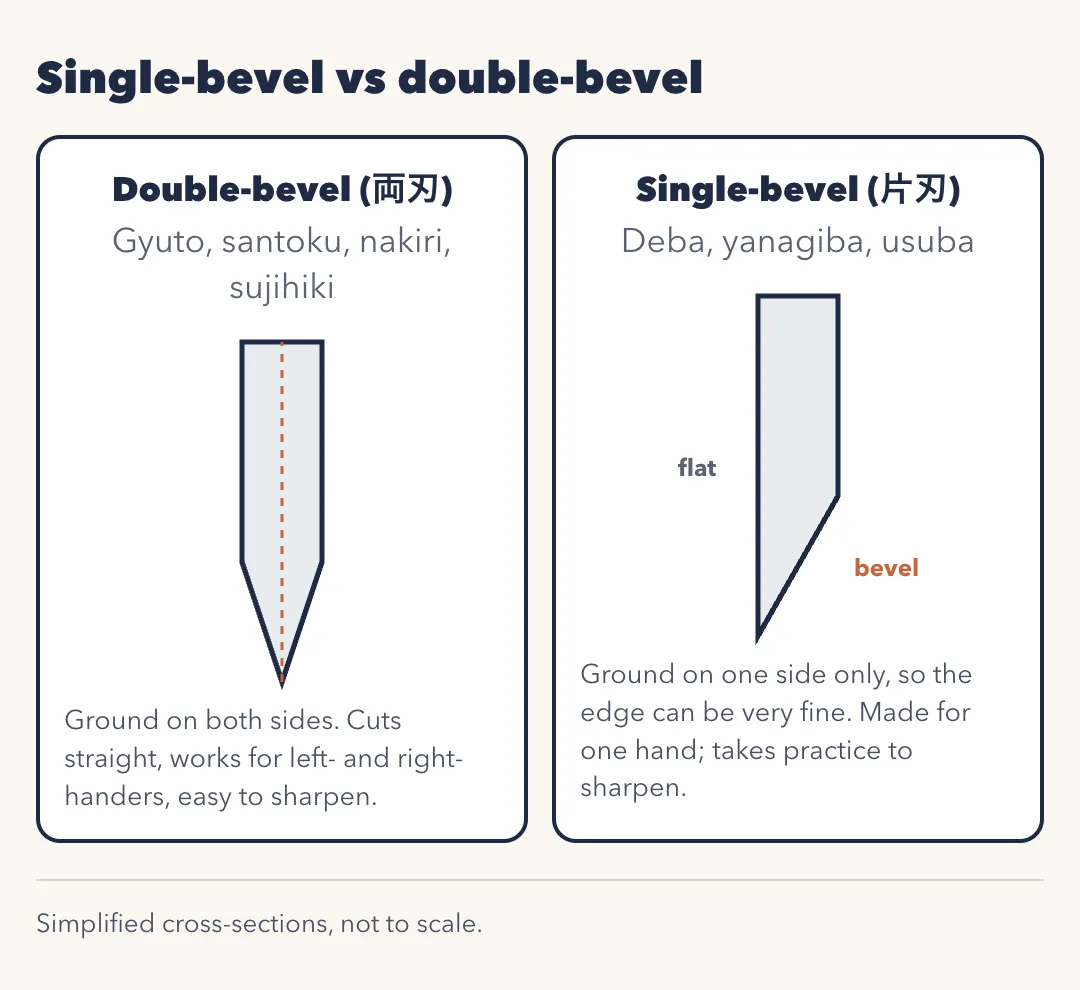
Traditional Japanese knives (*wabocho*) such as the deba, yanagiba and usuba are single-bevel (*kataba*, 片刃): sharpened on one side, flat or slightly hollow on the other. That lets the edge be extremely fine, which is why a yanagiba leaves sashimi with a glossy, clean surface. Two things to know before you buy one:
- They are made for one hand. Unless a listing says left-handed, a single-bevel knife is for right-handers. Left-handed versions exist but are harder to find.
- They sharpen differently. You sharpen mostly the beveled side and only flatten the back, so a double-bevel technique doesn't carry over. See our whetstone guide for the basics.
Western-style Japanese knives (gyuto, santoku, nakiri, sujihiki) are double-bevel (*ryoba*, 両刃) and work the same for either hand.
For meat
The drawings below are simple illustrations, not product photos. Prices and stock on Amazon change often, so check each listing.
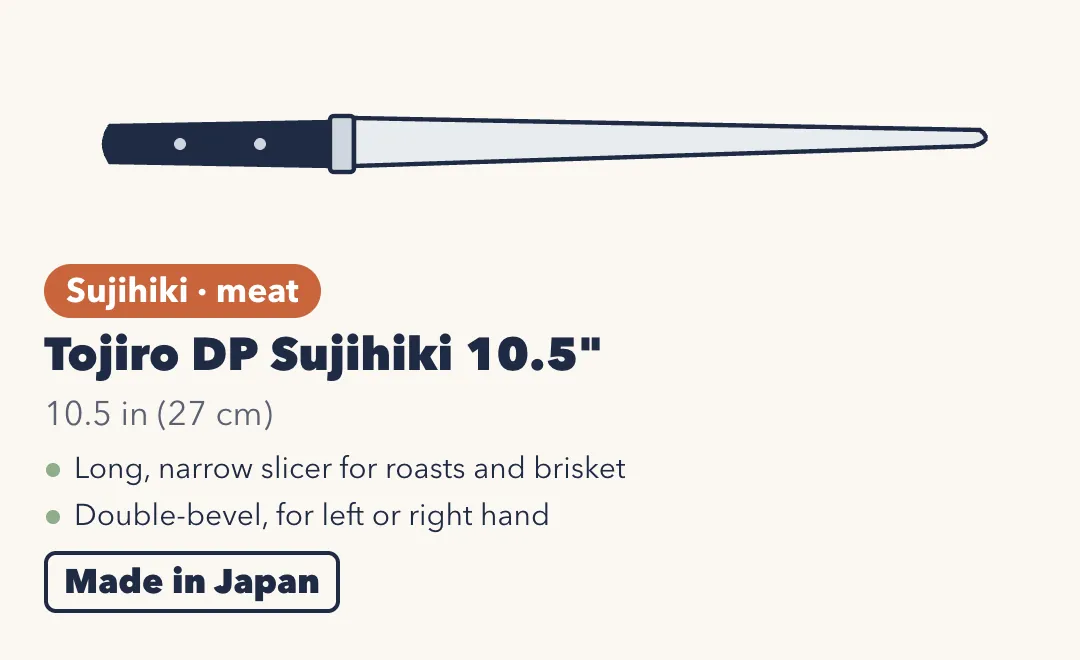
Sujihiki (筋引き): the slicer. The name means "sinew puller". It is a long, narrow, double-bevel blade made for slicing cooked or raw meat in long single strokes: a roast, a brisket, a ham, or trimming silver skin. The narrow blade has less surface for meat to stick to than a chef's knife. Tojiro's DP sujihiki is a 10.5-inch blade that Tojiro describes as stain resistant and even-edged, so it works for either hand.
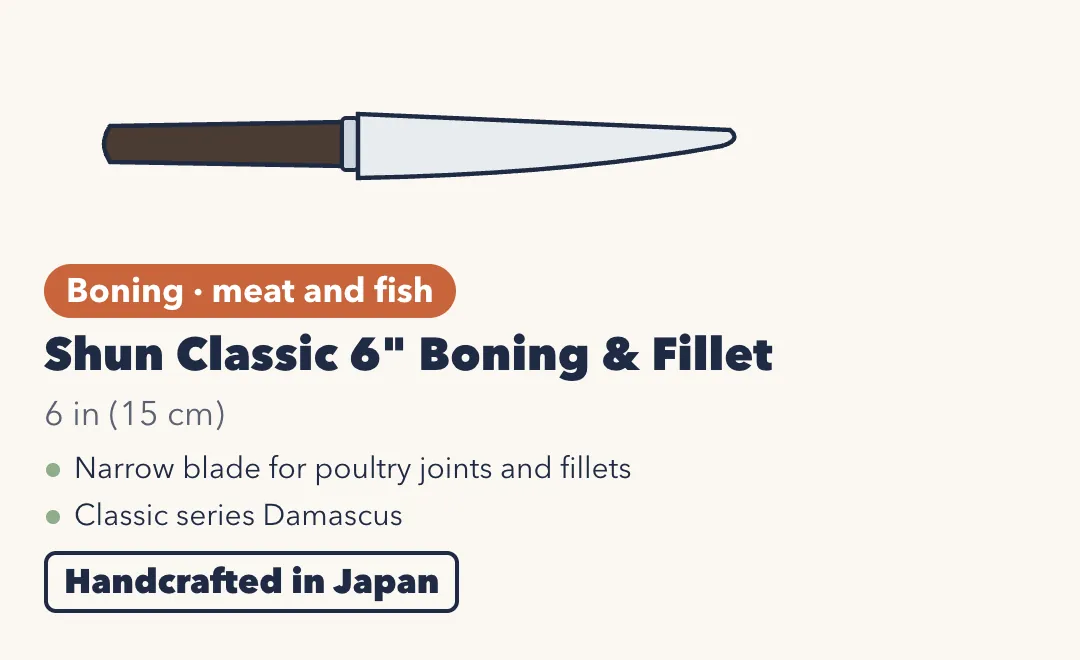
Honesuki (骨スキ) or boning knife: for chicken. A short, stiff, pointed blade for working around bones: taking a whole chicken apart at the joints, boning thighs, trimming pork. The Shun Classic 6" Boning & Fillet Knife, which Shun says is designed to glide through meat and fish, does the same job in a Western shape and doubles as a fillet knife.
For fish
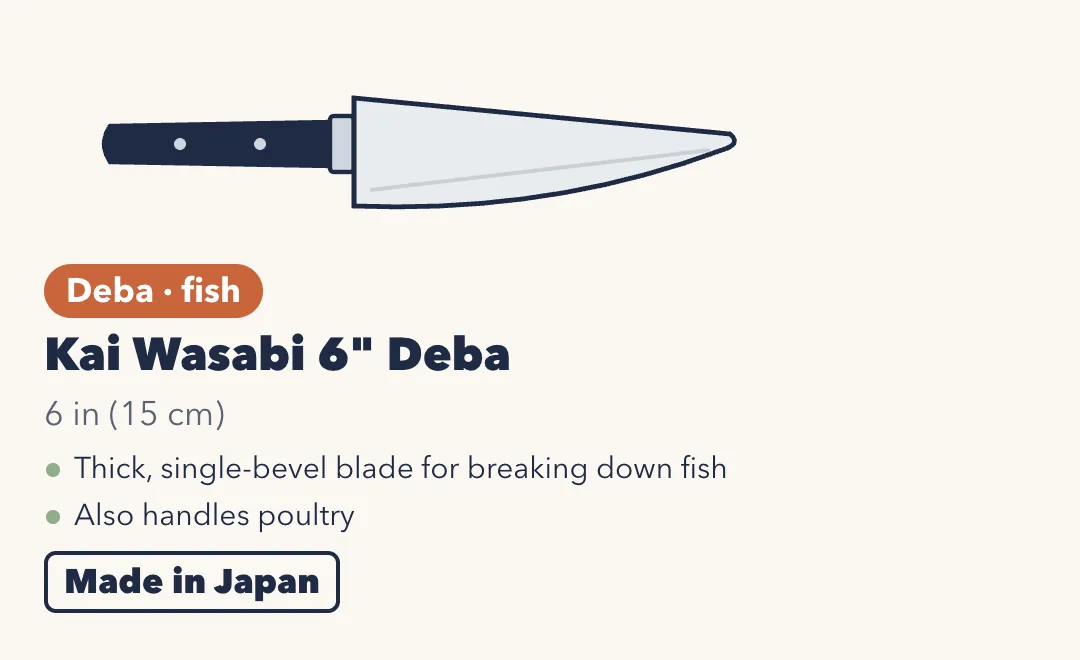
Deba (出刃): for breaking down whole fish. A thick, heavy, single-bevel blade that cuts through fish heads and small bones and then fillets along the spine. If you buy whole fish, this is the knife that makes it easy. Kai's Wasabi 6" Deba, from the company behind Shun, is single-beveled and made in Japan, and Kai says it handles poultry too. It has a polypropylene-bamboo handle and is an affordable way to try a deba.
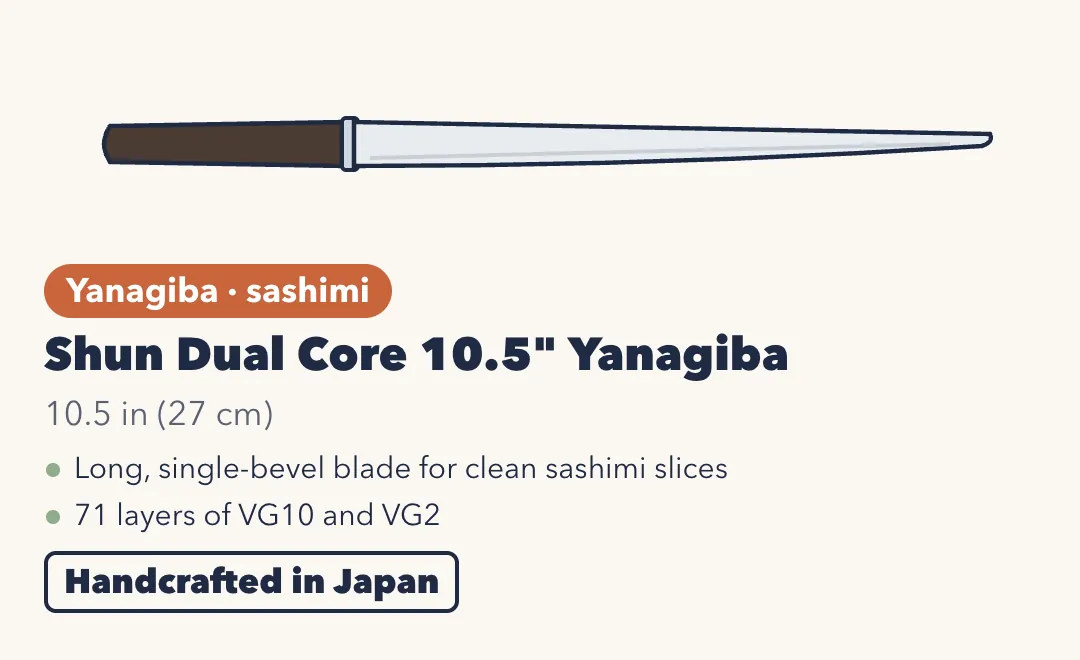
Yanagiba (柳刃): for sashimi. "Willow blade". It is long so that you can draw it through a block of fish in one pull without sawing back and forth, which is what keeps the cut surface smooth. Shun's Dual Core Yanagiba keeps the length, weight and single-beveled design of a traditional yanagiba, with 71 alternating layers of VG10 and VG2 stainless steel, and is handcrafted in Japan.
Only filleting the occasional salmon side? A gyuto or the boning knife above will do. Buy a deba and yanagiba if you regularly buy whole fish or make sushi at home.
For vegetables
Nakiri (菜切り) is the home vegetable knife: rectangular, flat-edged and double-bevel, so it chops straight down cleanly and works for either hand. Our picks are the Shun Classic 6.5" Nakiri and the Global G-5 in gyuto vs santoku, bunka and nakiri.
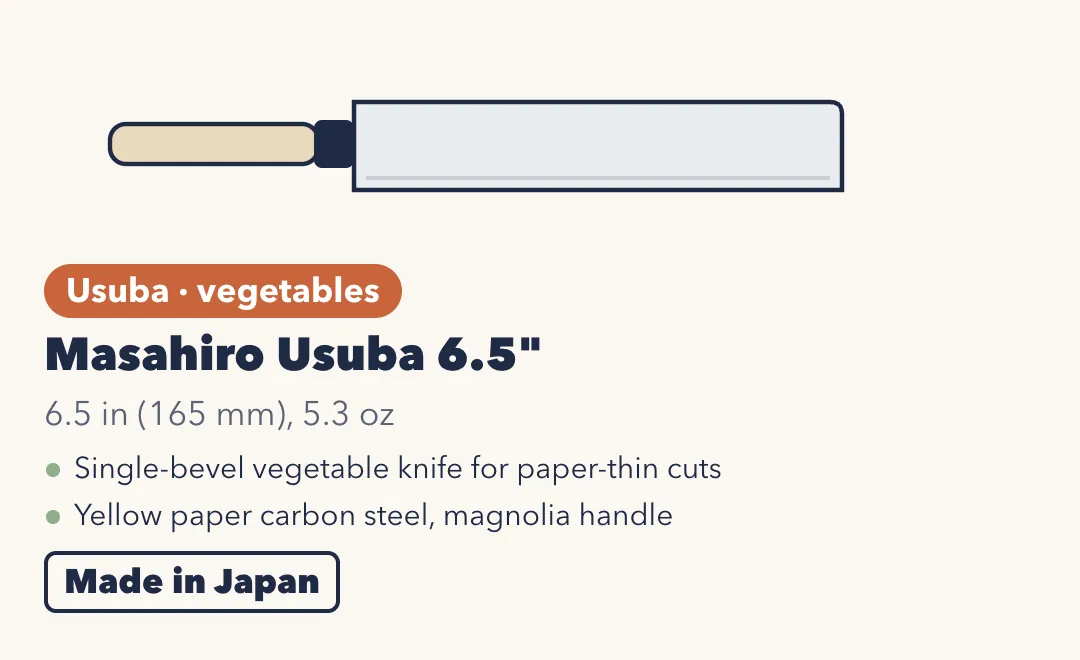
Usuba (薄刃): the professional's vegetable knife. It looks like a nakiri but is single-bevel, which allows very thin, precise cuts, such as *katsuramuki*, peeling a daikon into one long paper-thin sheet. This Masahiro usuba has a 6.5-inch blade of yellow paper carbon steel and a magnolia handle, and is made in Japan. Carbon steel takes a keen edge but rusts if left wet: wipe it dry right after use. Choose it if you enjoy technique; for everyday chopping, a nakiri is easier.
Which one suits you?
- You don't have a good all-rounder yet: start with a gyuto or santoku.
- You carve roasts, brisket or ham: a sujihiki, Tojiro DP 10.5".
- You break down whole chickens: a boning knife, Shun Classic 6".
- You buy whole fish: a deba, Kai Wasabi 6".
- You make sashimi or sushi at home: a yanagiba, Shun Dual Core 10.5".
- You chop lots of vegetables: a nakiri; an usuba if you want to learn traditional cuts.
- Comparing chef's knife brands: see Global vs Shun vs Wüsthof.
Source: Shun Cutlery (Kai USA)