
This guide contains affiliate links. If you buy through them, we may earn a commission at no extra cost to you.
Your First Japanese Knife: The Best Picks at Every Budget, From Tojiro to Miyabi
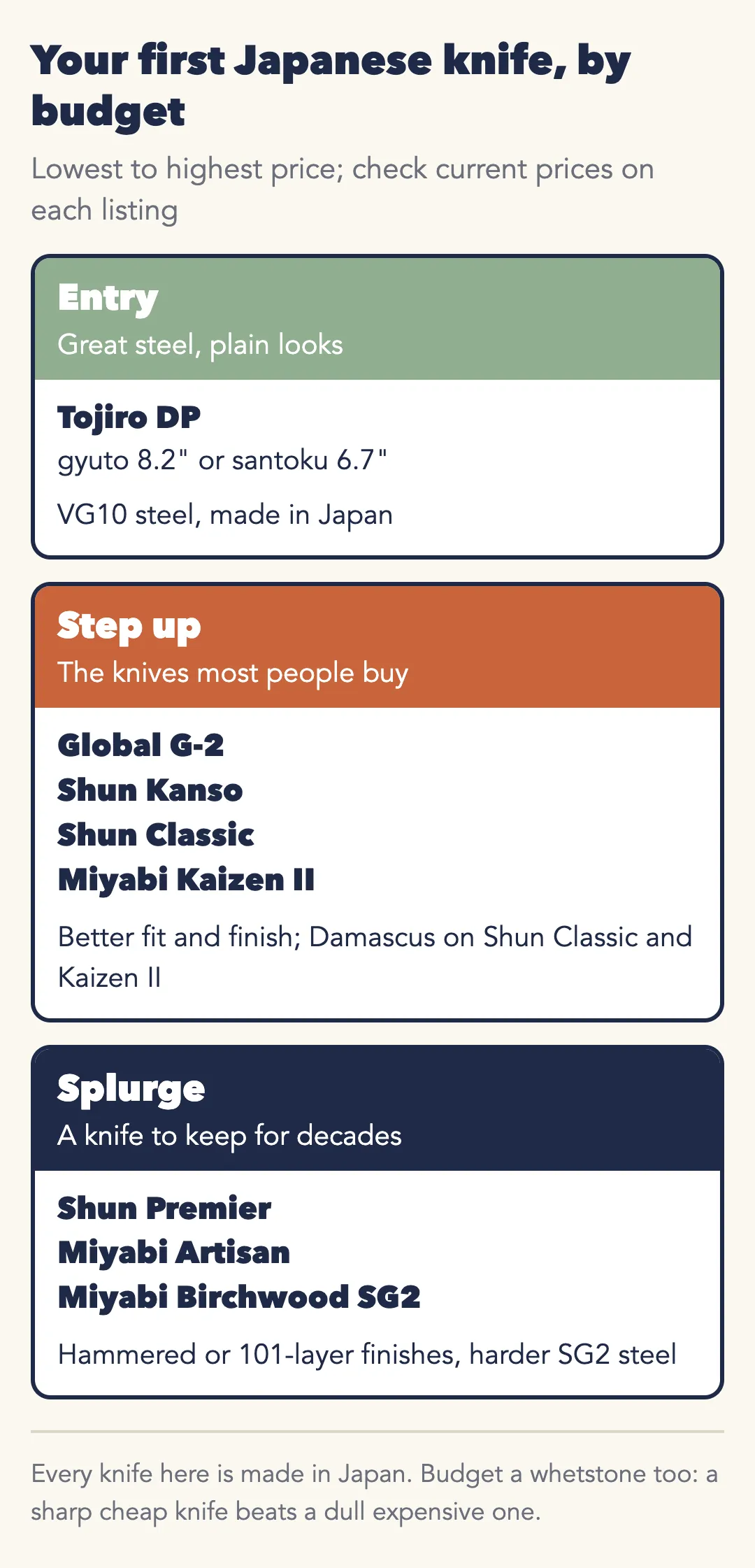
A good Japanese knife is one of the most noticeable upgrades you can make in a kitchen, and you don't have to spend a lot to get one. The best-value Japanese knives are plain-looking but use the same kind of hard stainless steel as knives that cost much more; the extra money mostly buys finish, design and an even thinner edge. This guide picks the best first Japanese knife at three budgets, all made in Japan and all on Amazon in the US. Prices change often, so check each listing.
Answer three questions first
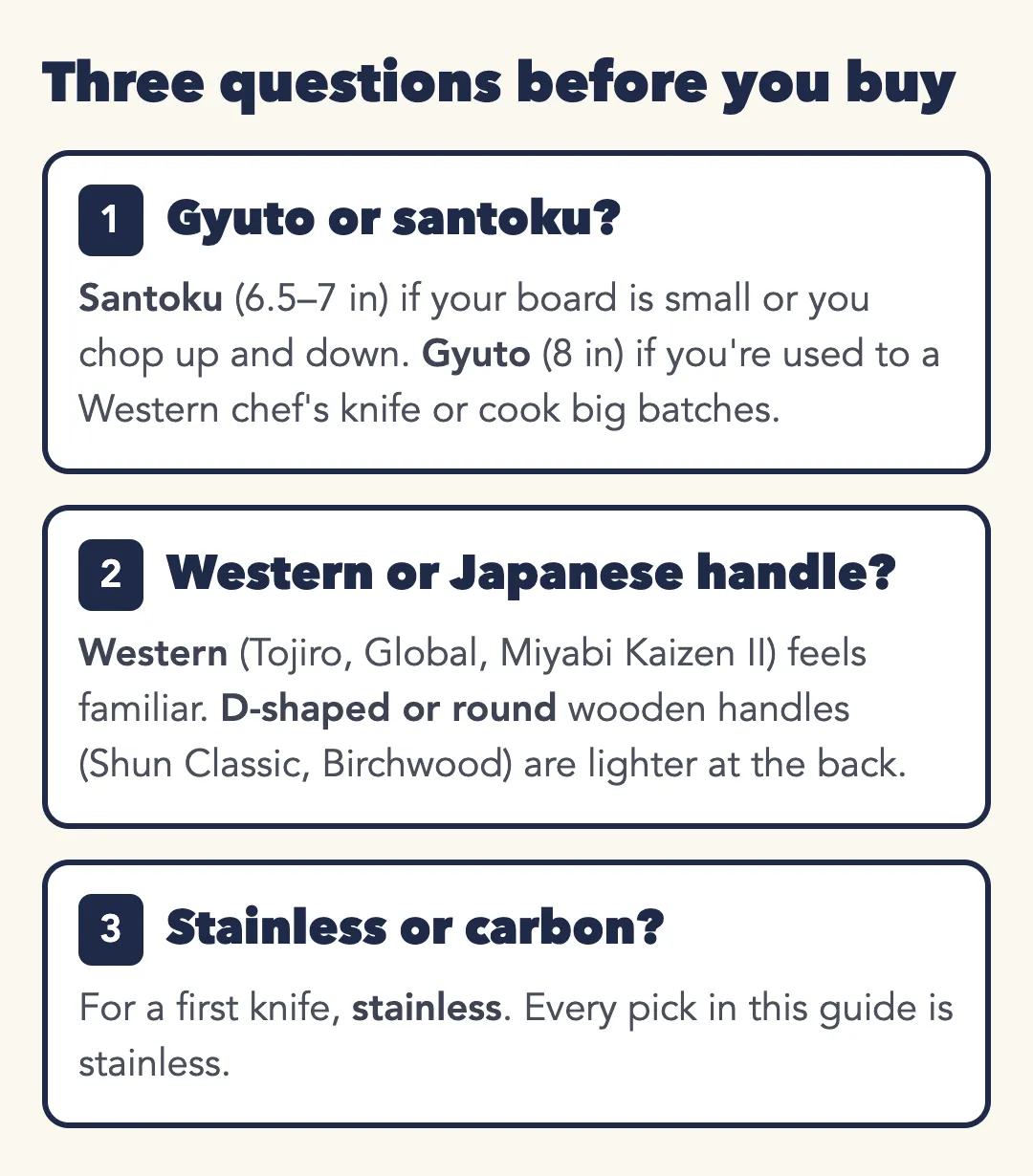
If you're unsure about shape, see gyuto vs santoku, bunka and nakiri; for steel, see carbon vs stainless. The drawings below are simple illustrations, not product photos.
Entry: Tojiro
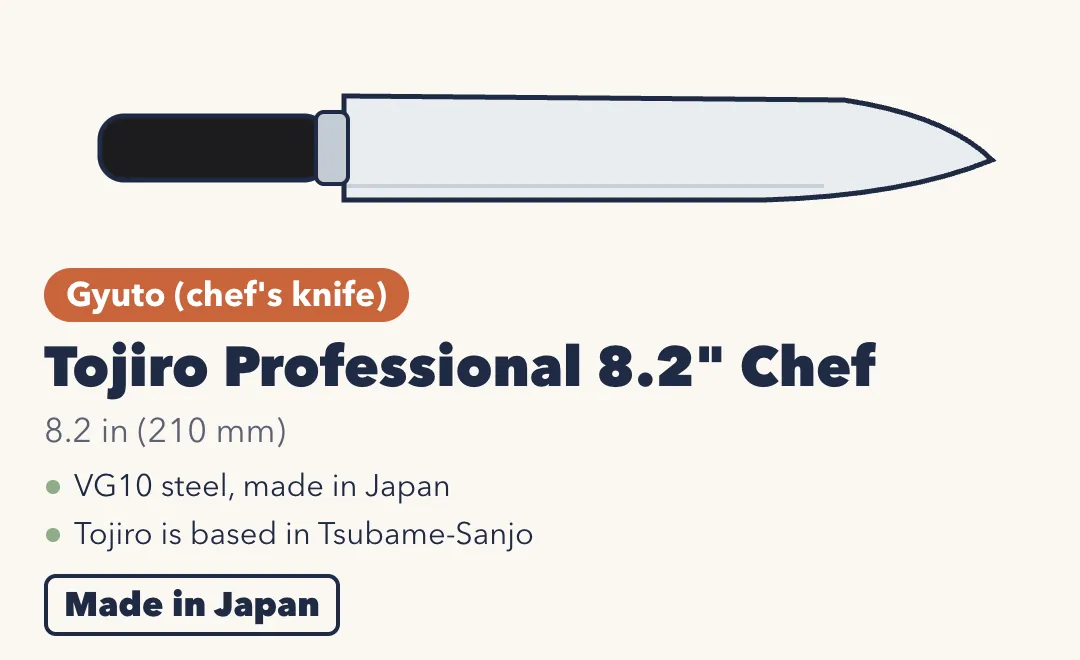
Tojiro DP 8.2" gyuto or 6.7" santoku: the knife enthusiasts recommend first. Tojiro is based in Tsubame-Sanjo in Niigata, one of Japan's metalworking centers. The gyuto, which Tojiro calls its flagship, uses VG10 steel and is made in Japan; the santoku has a cobalt alloy steel core clad in stainless. Neither has a Damascus pattern or a fancy handle. The money goes into the blade, which is why it is the usual answer to "what should my first Japanese knife be?"
Step up: Global, Shun and Miyabi
This is where most people end up, and the four knives here are all excellent; they differ in feel and looks. For a side-by-side of the first three, see Global vs Shun vs Wüsthof.
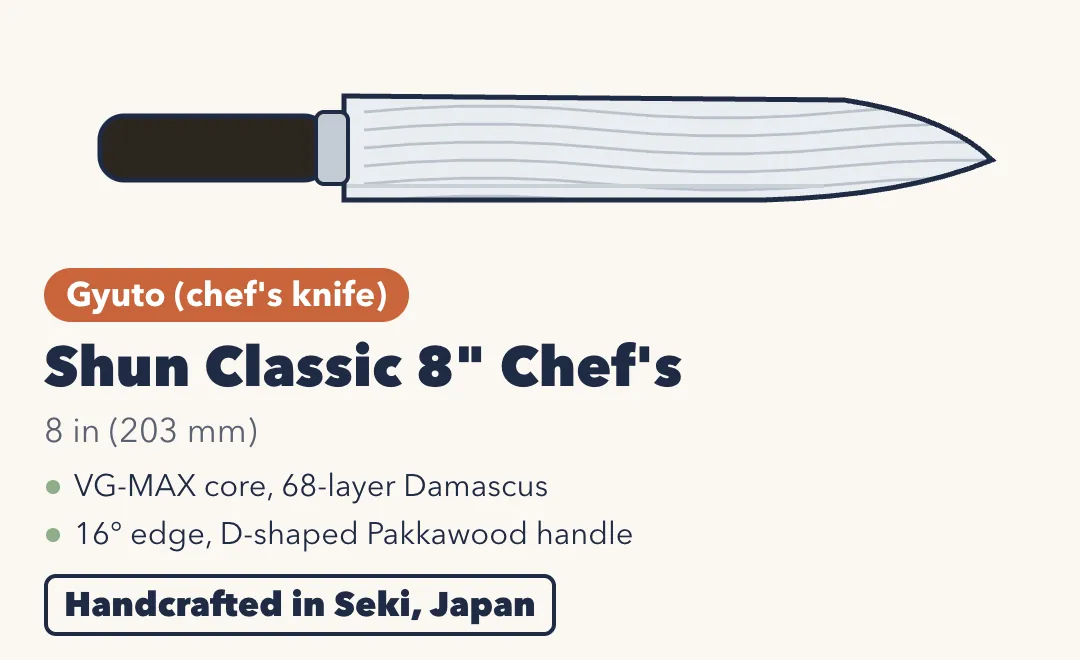
Shun Classic 8": the safe, beautiful choice. A VG-MAX core in 68 layers of Damascus, a 16-degree edge and a D-shaped Pakkawood handle, handcrafted in Seki. Shun offers free lifetime sharpening, which takes the worry out of a first good knife. Prefer a santoku? The Classic 7" Santoku has the same steel.
Global G-2 8": light and all steel. One piece of stainless steel from blade to dimpled handle, made by Yoshikin in Niigata since 1983. Nothing to rot or crack, and easy to keep clean.
Shun Kanso 8": simple and sturdy. AUS10A steel with a 16-degree edge and a tagayasan wood handle, without the Damascus cladding. The least fussy Shun.
Miyabi Kaizen II 8": the thinnest edge at this level. FC61 steel at Rockwell 61, 48 layers of Damascus, and a hand-honed 9.5 to 12 degree edge, with a Western-style handle. See Shun vs Miyabi for how it compares.
Splurge: a knife for decades
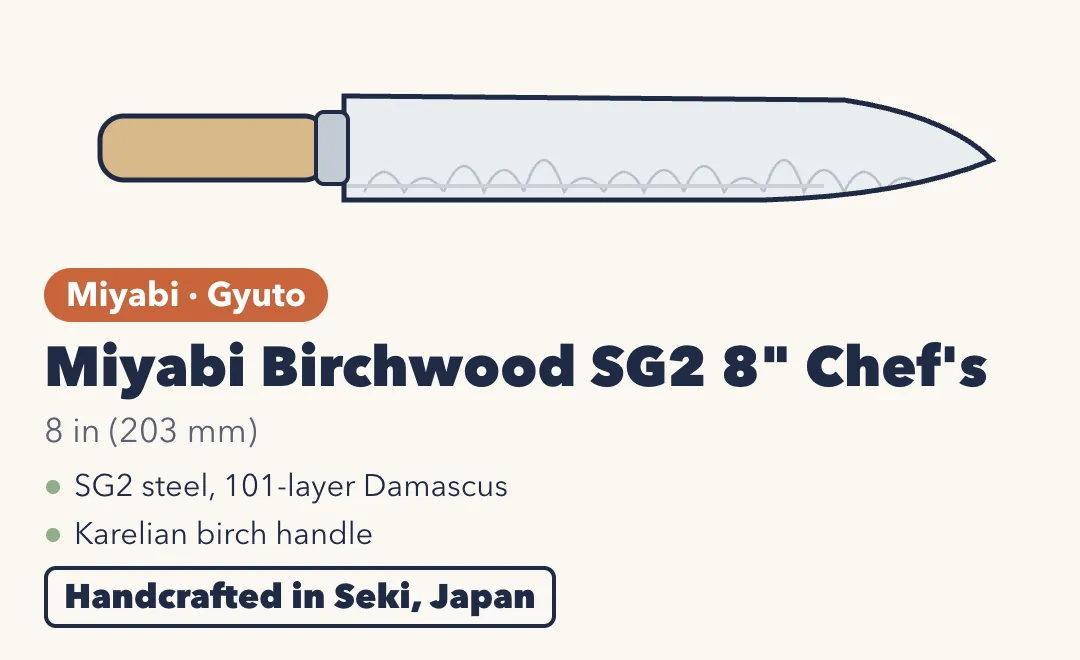
Miyabi Birchwood SG2 8": the heirloom. SG2 powder steel in a 101-layer flower Damascus with a Karelian birch handle, handcrafted in Seki. The knife people give for weddings and milestone birthdays.
Miyabi Artisan 8" pairs the same hard SG2 steel with a hammered finish and a cocobolo handle, and Shun Premier 8" puts a hand-hammered *tsuchime* finish and a walnut-toned handle on the Classic's VG-MAX blade.
Buy a whetstone with it
Every knife dulls. A sharp entry-level knife cuts better than a dull expensive one, so set aside part of your budget for a whetstone. A King 1000/6000 combination stone covers everything a home cook needs; see our whetstone guide for how to use it. And keep it away from the dishwasher, glass boards and frozen food.
Which one suits you?
- Lowest cost, best steel for the money: Tojiro DP gyuto or santoku.
- One great knife with free sharpening: Shun Classic.
- Light, all steel, easy to clean: Global G-2.
- Simple and sturdy: Shun Kanso.
- The thinnest edge without the top price: Miyabi Kaizen II.
- A gift, or a knife for decades: Miyabi Birchwood SG2, Miyabi Artisan or Shun Premier.
- Cook a lot of one food: see knives for meat, fish and vegetables.
Source: Shun Cutlery (Kai USA)